Introduction
Sensitive skin can be challenging to manage in humid weather. Heat, sweat, frequent cleansing, air conditioning, sun exposure, and irritating skincare products can leave your skin feeling itchy, tight, red, or uncomfortable—even when the weather itself feels moist.
That’s why sensitive skin care in humid weather should focus on keeping your skin clean, comfortable, and supported without overwhelming it with too many products. A heavy routine isn’t always better, and skipping moisturizer completely isn’t always the answer either.
In this guide, you’ll discover simple and gentle ways to care for sensitive skin during humid weather, including a practical morning and night routine, moisturizer guidance, ingredients to look for and avoid, common mistakes, and tips for keeping your skin calm and comfortable.
Why Does Sensitive Skin React More in Humid Weather?
Humid weather can make sensitive skin feel uncomfortable because heat, sweat, moisture, and environmental exposure can increase irritation. When the skin barrier is already easily disturbed, these conditions may lead to redness, stinging, itching, or small bumps.
At the same time, humidity does not mean sensitive skin needs a heavy or complicated routine. Using too many products, frequent cleansing, harsh exfoliation, or strongly fragranced products can make the skin more reactive.
Common reasons sensitive skin may struggle in humid weather:
- Sweat and heat: Can cause discomfort and make the skin feel irritated.
- More frequent cleansing: Washing the face repeatedly to remove sweat can strip the skin barrier.
- Heavy products: Thick creams may feel uncomfortable and can contribute to clogged pores for some people.
- Fragrance and harsh ingredients: Sensitive skin may react more easily to irritating ingredients.
- Air conditioning: Spending long periods in AC can reduce the comfortable feel of the skin despite humid outdoor weather.
- Sun exposure: UV exposure can increase redness and irritation, making daily sunscreen especially important.
✨ Glow In Budget Expert Tip:
Sensitive skin usually benefits from a simple, consistent routine rather than constantly changing products. In humid weather, focus on gentle cleansing, lightweight hydration, moisturizer, and daily broad-spectrum sunscreen.

Signs Your Sensitive Skin Needs Extra Care in Humid Weather
Sensitive skin can react differently from day to day, especially when heat, sweat, humidity, air conditioning, and sun exposure are all part of your routine. Paying attention to these changes can help you adjust your skincare before irritation becomes more uncomfortable.
Common signs to watch for:
- Redness: Your skin looks noticeably red or flushed, particularly after cleansing or being outdoors.
- Stinging or burning: Products that normally feel comfortable suddenly cause tingling, stinging, or burning.
- Itching: Your skin feels itchy or uncomfortable without an obvious cause.
- Tight or dry patches: Some areas feel tight, rough, or flaky despite the humid weather.
- Small bumps: Heat, sweat, or product buildup may contribute to tiny bumps or an uneven texture.
- Increased sensitivity: Your skin starts reacting to products that previously worked well for you.
- Excessive discomfort after sweating: Sweat may leave your face feeling irritated, sticky, or uncomfortable.
- Skin feels worse after over-cleansing: Frequent washing may leave your skin tight, dry, or more reactive.
You don’t need to experience all of these signs for your skin to need extra care. Even a few recurring symptoms can be a reason to simplify your routine and focus on protecting the skin barrier.
✨ Glow In Budget Expert Tip:
Don’t immediately add more products when your skin becomes irritated. Simplify first—use gentle, familiar products and avoid unnecessary exfoliation or strong active ingredients until your skin feels comfortable again.

Morning Skincare Routine for Sensitive Skin in Humid Weather
A good morning routine for sensitive skin in humid weather should protect the skin without making it feel heavy, greasy, or overloaded with products. The goal is to keep the skin comfortable, hydrated, and protected while minimizing potential irritation.
1. Gentle Cleanse
Start with a gentle, non-stripping cleanser to remove overnight oil, sweat, and product residue.
If your skin feels dry or tight in the morning, you may not need an aggressive cleanse. A gentle rinse or mild cleanser can be enough depending on how your skin feels.
Look for:
- Fragrance-free or low-irritant formulas
- Gentle cleansing agents
- A comfortable, non-drying finish
Avoid scrubbing your face or using very hot water, as both can increase irritation.
2. Lightweight Hydration
After cleansing, apply a lightweight hydrating product if your skin needs additional moisture.
Ingredients such as glycerin, panthenol, or hyaluronic acid can help support hydration without necessarily making the routine feel heavy.
Apply a small amount rather than layering several hydrating products.
3. Gentle Moisturizer
Even in humid weather, sensitive skin may still need a moisturizer to help maintain a healthy skin barrier.
Choose a lightweight, fragrance-free moisturizer that feels comfortable on your skin. If your skin is particularly dry or irritated, you may need a slightly richer formula.
The goal is comfortable hydration—not maximum product layering.
4. Broad-Spectrum Sunscreen
Finish your morning routine with a broad-spectrum sunscreen, ideally SPF 30 or higher.
How do I know if i am using the right sunscreen?
Sensitive skin can sometimes find sunscreen uncomfortable, so look for a formula that your skin tolerates well. Apply enough to adequately cover the face, neck, and other exposed areas.
For more guidance on choosing a suitable sunscreen, read the American Academy of Dermatology’s advice on choosing sun scream for sensitive skin.
If you are outdoors, reapply according to the product directions and your level of sun exposure.
5. Keep the Routine Simple
Sensitive skin doesn’t necessarily need a long morning routine.
Simple Morning Flow:
Gentle Cleanse
↓
Lightweight Hydration
↓
Gentle Moisturizer
↓
Broad-Spectrum Sunscreen
↓
Comfortable + Protected Skin
✨ Glow In Budget Expert Tip:
In humid weather, don’t judge hydration by how many products you use. If your skin feels comfortable, soft, and calm, your routine is doing its job. Keep the number of products manageable and introduce new products one at a time so you can identify what your skin tolerates.

Daytime Sensitive Skin Care Tips for Humid Weather
After your morning routine, sensitive skin may still need a little attention throughout the day. Heat, sweat, pollution, sunscreen, and frequent touching can make sensitive skin feel more irritated or uncomfortable.
Instead of repeatedly washing your face or adding more products, focus on keeping your skin clean, protected, and comfortable.
1. Avoid Frequent Face Washing
It can be tempting to wash your face whenever you feel sweaty or sticky. However, repeated cleansing can remove protective oils and leave sensitive skin feeling dry or irritated.
If you become sweaty, gently pat your skin with a clean, soft towel or tissue instead of rubbing.
2. Don’t Keep Touching Your Face
Sweaty weather can make you more likely to touch, wipe, or scratch your face.
Frequent touching can increase irritation and transfer dirt and other substances to the skin. Try to keep your hands away from your face as much as possible.
3. Stay Consistent With Sunscreen
Humidity does not reduce the importance of sun protection. Continue using broad-spectrum sunscreen during the day, especially when spending time outdoors.
If you are outdoors for extended periods, reapply according to the sunscreen’s directions and your exposure.
4. Be Careful With New Products
Humid weather is not the ideal time to experiment with several new skincare products at once if your skin is easily irritated.
Introduce one new product at a time and give your skin time to show how it responds.
5. Manage Sweat Gently
Sweat itself isn’t necessarily a problem, but leaving sweat on the skin for long periods can feel uncomfortable.
Gently pat away excess sweat rather than rubbing or scrubbing the skin.
✨ Glow In Budget Expert Tip:
When sensitive skin feels irritated during the day, resist the urge to fix it with more products. Gentle handling, sun protection, and a simple routine are often better than constant cleansing or layering.
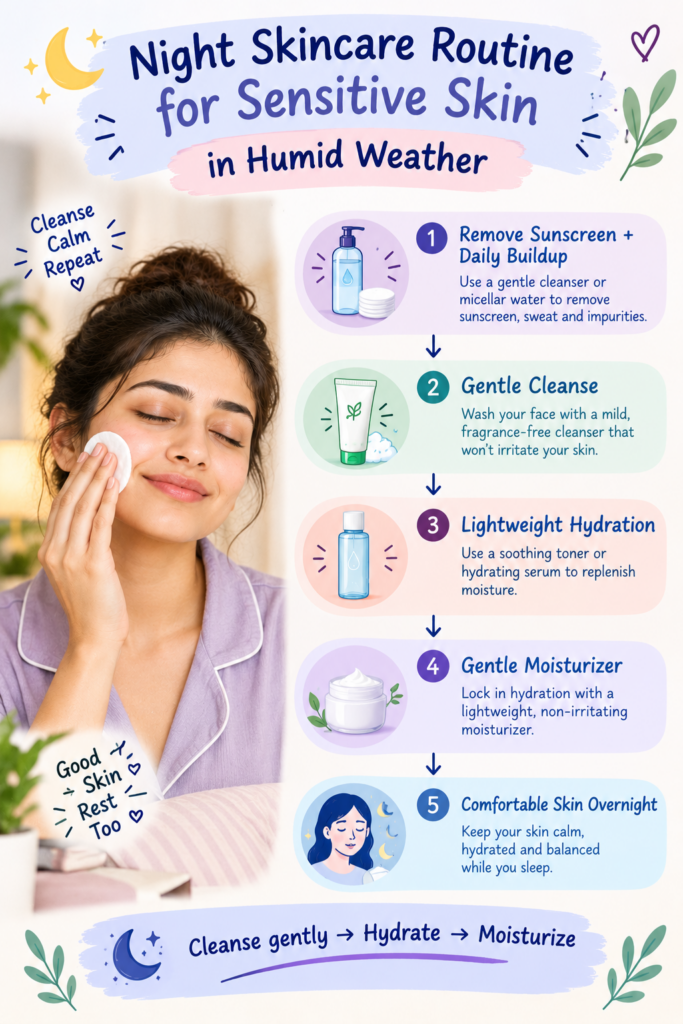
Night Skincare Routine for Sensitive Skin in Humid Weather
Your skin still needs gentle care at night, even when the weather is humid. The goal of a nighttime routine is to remove sunscreen, sweat, and daily buildup without stripping the skin, then provide enough hydration to support a comfortable skin barrier.
1. Gently Remove Sunscreen and Daily Buildup
Start by removing sunscreen, makeup, and other products from the day.
Use a gentle cleanser that leaves your skin feeling clean but not tight or squeaky. If you wear makeup or water-resistant sunscreen, you may need an appropriate first cleansing step followed by a gentle cleanser.
Avoid rubbing the skin aggressively.
2. Apply Lightweight Hydration
If your skin feels dehydrated or uncomfortable after cleansing, apply a simple hydrating product.
A lightweight formula containing ingredients such as glycerin or panthenol can provide hydration without making your nighttime routine unnecessarily heavy.
3. Moisturize According to Your Skin’s Needs
Follow with a gentle moisturizer to help maintain the skin barrier overnight.
If your skin feels comfortable and hydrated, you don’t need to apply a very thick layer simply because you have sensitive skin. If certain areas become dry or irritated, you can use a little more moisturizer on those areas.
4. Keep Strong Actives Minimal
Sensitive skin may not tolerate frequent use of strong exfoliating acids, retinoids, or other potentially irritating active ingredients—especially when the skin is already experiencing redness or sensitivity.
If you use an active ingredient, introduce it carefully and follow the product’s directions rather than adding multiple actives to the same routine.
5. Give Your Skin a Break
A nighttime routine doesn’t need to contain many steps.
Simple Night Flow:
Gentle Cleanse
↓
Lightweight Hydration
↓
Gentle Moisturizer
↓
Comfortable Skin Overnight
✨ Glow In Budget Expert Tip:
If your skin is currently irritated, simplify your nighttime routine instead of adding more treatments. Once your skin feels calm and comfortable again, you can gradually reintroduce products your skin already tolerates.
How Often Should You Moisturize Sensitive Skin in Humid Weather?
Humidity can make sensitive skin feel sweaty or sticky, but that doesn’t mean you should stop moisturizing. Your skin can still become dehydrated or irritated, particularly after cleansing, spending time in air conditioning, or being exposed to heat and sun.
The right frequency depends more on how your skin feels than on the weather alone.
When to Moisturize
- Morning: Apply moisturizer after cleansing or hydration and before sunscreen.
- Night: Moisturize after your evening cleansing routine.
- After cleansing: If your skin feels tight, dry, or uncomfortable, apply moisturizer rather than leaving it bare.
- When needed: Dry or irritated areas may need a little extra moisturizer during the day.
Adjust the Amount, Not Just the Frequency
You don’t necessarily need a heavy layer of moisturizer in humid weather. If your skin feels comfortable, use a lighter amount.
If your skin feels:
- Comfortable and soft: Continue with your current amount.
- Tight or flaky: You may need more hydration or a slightly richer moisturizer.
- Sweaty or sticky: Try using a smaller amount or a lighter texture.
- Dry from air conditioning: Add enough moisturizer to keep those areas comfortable.
✨ Glow In Budget Expert Tip:
Humid weather doesn’t decide how much moisturizer your skin needs—your skin does. Adjust the texture and amount according to your skin’s comfort instead of skipping moisturizer altogether.
How to Choose the Best Moisturizer for Sensitive Skin in Humid Weather
Choosing a moisturizer for sensitive skin in humid weather is less about finding the richest formula and more about finding one that keeps your skin comfortable without causing unnecessary irritation.
A good moisturizer should support the skin barrier while feeling light enough for warm, humid conditions.
What to Look For
- Fragrance-free formula: Fragrance can be irritating for some sensitive skin types.
- Simple ingredient list: Fewer unnecessary ingredients can make it easier to identify what your skin tolerates.
- Gentle hydrating ingredients: Look for ingredients such as glycerin, panthenol, or ceramides.
- Comfortable texture: A lightweight cream, lotion, or gel-cream may feel more comfortable in humid weather.
- Barrier-supporting ingredients: Ingredients such as ceramides can help support the skin barrier.
What to Avoid When Your Skin Is Reactive
When your skin is already irritated, be cautious with products containing:
- Strong fragrance
- Essential oils
- Harsh alcohols
- Multiple strong active ingredients
- Products that cause noticeable burning or stinging
A product marketed specifically for sensitive skin isn’t automatically suitable for everyone. Your own skin’s response matters most.
Should You Use a Gel, Lotion, or Cream?
There isn’t one texture that works for every sensitive skin type.
- Gel or gel-cream: May feel comfortable if your skin becomes sweaty or sticky.
- Light lotion: A useful middle ground for normal-to-dry sensitive skin.
- Cream: Better suited to areas that become dry, tight, or flaky.
You can also adjust the amount depending on different areas of your face instead of applying the same thickness everywhere.
✨ Glow In Budget Expert Tip:
Don’t choose a moisturizer simply because it feels lightweight. For sensitive skin, comfort and tolerance come first. A slightly richer fragrance-free moisturizer that your skin tolerates well can be a better choice than a very lightweight product that causes irritation.
How to Prevent Clogged Pores and Irritation on Sensitive Skin in Humid Weather
Humid weather can make skin feel sweaty, sticky, and more congested. For sensitive skin, the challenge is finding a balance between keeping the skin comfortable and avoiding products or habits that may contribute to clogged pores.
For readers dealing with persistent excess oil, our guide to [DIY face masks for extremely oily skin] offers additional skincare ideas.
You don’t need an aggressive routine to keep your pores clear. Gentle, consistent care is usually a better approach.
1. Choose Lightweight, Comfortable Products
If your skin feels heavy or greasy in humid weather, consider lighter textures such as lotions or gel-creams.
However, don’t automatically avoid every richer moisturizer. A product that works well for your skin doesn’t need to be replaced simply because the weather is humid.
2. Avoid Excessive Product Layering
Using several serums, creams, facial oils, and treatments together can make your routine unnecessarily heavy.
If excess oil is also a concern, check out our guide to [DIY face masks for oily skin] for more targeted skincare ideas.
Keep your routine focused on the essentials:
Cleanse → Hydrate → Moisturize → Protect
3. Don’t Over-Cleanse
Washing your face repeatedly may seem like a good way to prevent clogged pores, but excessive cleansing can irritate sensitive skin and leave the skin barrier uncomfortable.
Cleanse gently and avoid scrubbing.
4. Be Careful With Exfoliation
Exfoliation isn’t automatically necessary just because your skin feels congested.
If your sensitive skin is already red, stinging, itchy, or irritated, avoid adding exfoliating products until your skin settles.
When using an exfoliating ingredient, follow the product directions and introduce it gradually.
5. Remove Sweat and Sunscreen Properly at Night
At the end of the day, gently cleanse away sunscreen, sweat, makeup, and daily buildup.
This helps keep your nighttime routine clean without relying on harsh scrubbing.
6. Keep Your Pillowcase and Towels Clean
Clean fabrics can help reduce the buildup of sweat, oil, skincare residue, and other impurities that repeatedly come into contact with your face.
Change pillowcases regularly and use a clean, soft towel for your face.
✨ Glow In Budget Expert Tip:
Clogged pores don’t mean you need a stronger skincare routine. For sensitive skin, avoid the cycle of over-cleansing and over-exfoliating. Keep your routine gentle and adjust products only when your skin actually needs a change.
Weekly Care Routine for Sensitive Skin in Humid Weather
Sensitive skin usually doesn’t need an intensive weekly treatment routine. In humid weather, a simple weekly check-in can help you notice dryness, irritation, excess buildup, or changes in how your skin is responding to your products.
The goal is to support your skin barrier, not constantly treat or exfoliate it.
1. Check How Your Skin Feels
Before adding any weekly treatment, look at how your skin is behaving.
Ask yourself:
- Does my skin feel comfortable?
- Are there dry or flaky areas?
- Is there redness or stinging?
- Does my skin feel unusually oily or congested?
- Have I recently introduced a new product?
If your skin is irritated, skip unnecessary treatments and keep your routine simple.
2. Gentle Exfoliation — Only If Needed
Exfoliation is optional for sensitive skin.
If your skin tolerates exfoliation well, use a gentle product according to its directions rather than exfoliating frequently.
Avoid physical scrubs, rough brushes, or aggressive rubbing, especially if your skin is already sensitive.
3. Give Dry Areas Extra Moisture
If certain areas feel dry or tight, apply a little extra moisturizer to those areas.
You don’t need to apply a thick layer over your entire face if only a few areas need additional moisture.
4. Consider a Simple Hydrating Mask
A gentle, fragrance-free hydrating mask can be an optional addition if your skin enjoys it.
If you enjoy occasional at-home skincare, explore our guide to [DIY face masks for sensitive skin] for gentle options suited to your skin type.
Choose products with ingredients your skin already tolerates instead of trying multiple new ingredients at once.
5. Keep the Rest of the Routine Simple
After weekly care, return to your normal gentle skincare routine.
Weekly Care Flow:
Check Your Skin
↓
Gentle Exfoliation — Only If Needed
↓
Extra Moisture for Dry Areas
↓
Optional Hydrating Mask
↓
Return to Your Simple Routine
✨ Glow In Budget Expert Tip:
Sensitive skin doesn’t need a weekly “deep clean.” If your skin is calm and comfortable, there may be nothing you need to exfoliate or treat that week. Listen to your skin instead of following a rigid schedule.

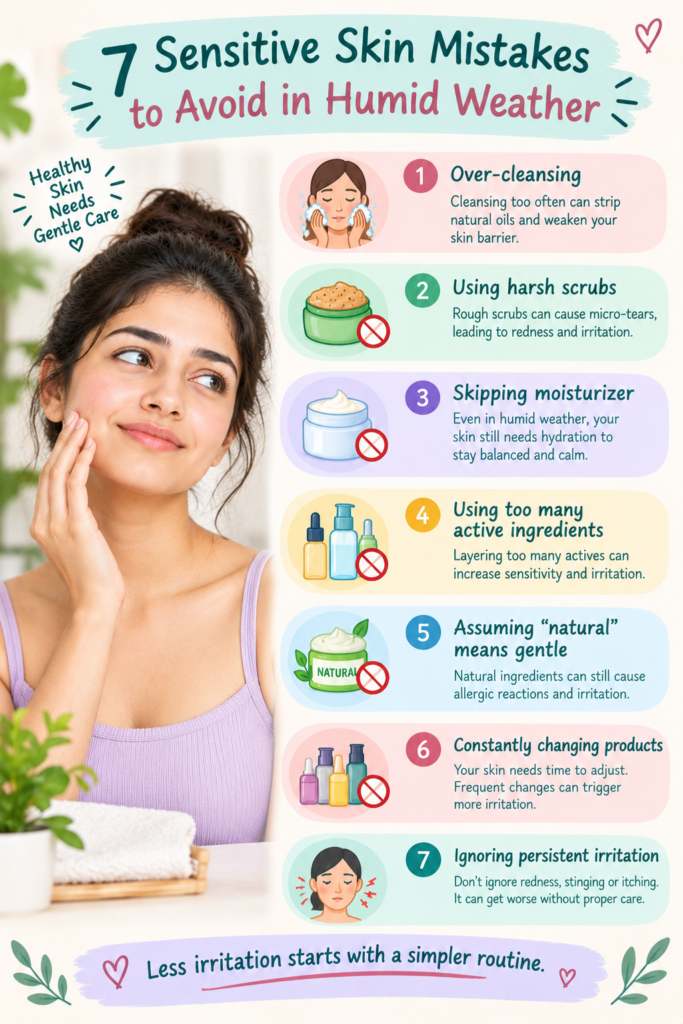
7 Sensitive Skin Mistakes to Avoid in Humid Weather
Humid weather can make sensitive skin tricky to manage. When your face feels sweaty, sticky, or irritated, it’s easy to respond by washing more often or adding more products. Unfortunately, these habits can sometimes make sensitive skin even more uncomfortable.
Here are some common mistakes worth avoiding:
1. Over-Cleansing Your Skin
Washing your face repeatedly to remove sweat and oil can strip the skin and increase dryness or irritation.
Better approach: Cleanse gently and avoid unnecessary washing throughout the day.
2. Using Harsh Scrubs
Rough physical scrubs and aggressive rubbing can be too irritating for sensitive skin.
Better approach: If you exfoliate, choose a gentle approach and use it only as often as your skin tolerates.
3. Skipping Moisturizer Because It’s Humid
Humidity doesn’t automatically provide all the hydration your skin needs.
Better approach: Continue moisturizing, but adjust the amount and texture according to how your skin feels.
4. Using Too Many Active Ingredients
Layering several exfoliating acids, retinoids, or other strong treatments can increase the chance of irritation.
Better approach: Keep your routine simple and introduce active ingredients gradually.
5. Choosing Products Only Because They’re “Natural”
Natural or botanical ingredients aren’t automatically gentle. Fragrance and essential oils, for example, can be irritating for some people with sensitive skin.
Better approach: Choose products based on how well your skin tolerates them rather than marketing claims alone.
6. Constantly Changing Your Skincare Routine
Trying multiple new products at the same time makes it difficult to know which product is causing a reaction.
Better approach: Introduce one new product at a time and give your skin time to adjust.
7. Ignoring Persistent Irritation
Redness, burning, itching, or irritation that keeps returning shouldn’t simply be covered up with more skincare products.
Better approach: Stop products that appear to trigger irritation and consider speaking with a dermatologist if symptoms persist or become severe.
✨ Glow In Budget Expert Tip:
For sensitive skin, more skincare doesn’t always mean better skincare. A gentle cleanser, comfortable moisturizer, and daily sunscreen can be more useful than a complicated routine filled with treatments your skin doesn’t tolerate.
Bonus Tips for Managing Sensitive Skin in Humid Weather
Small daily habits can make a noticeable difference when you’re trying to keep sensitive skin comfortable in warm and humid conditions. Along with your basic skincare routine, these simple adjustments can help reduce unnecessary irritation.
- Keep your face towel clean: Use a soft, clean towel and gently pat your face instead of rubbing.
- Avoid very hot water: Lukewarm water is generally more comfortable for sensitive skin.
- Change sweaty clothes: Don’t let sweat remain against your skin for long periods.
- Keep skincare products simple: Avoid adding several new products at once.
- Stay mindful of air conditioning: Long periods in AC can make some areas feel dry or tight even when it’s humid outdoors.
- Protect your skin from direct sun: Use broad-spectrum sunscreen and seek shade when possible.
- Don’t pick or scratch irritated areas: This can make redness and discomfort worse.
- Patch-test new products: Test a new product on a small area before applying it more broadly.
- Pay attention to your skin: Adjust your routine when your skin becomes unusually dry, oily, red, or uncomfortable.
✨ Glow In Budget Expert Tip:
The best humid-weather routine for sensitive skin is usually simple, gentle, and consistent. You don’t need to follow every skincare trend—focus on what keeps your own skin calm and comfortable.
Common Questions About Sensitive Skin Care in Humid Weather
1. Should I moisturize sensitive skin in humid weather?
Yes. Humid weather doesn’t mean sensitive skin no longer needs moisturizer. Choose a comfortable, lightweight formula if your skin feels sweaty or sticky, and adjust the amount according to your skin’s needs.
2. Can humid weather make sensitive skin worse?
It can. Heat, sweat, sun exposure, frequent cleansing, and air conditioning can all contribute to discomfort or irritation. However, everyone’s skin responds differently.
3. Should I exfoliate sensitive skin every week?
Not necessarily. Exfoliation is optional for sensitive skin. If your skin is red, stinging, itchy, or irritated, it’s better to skip exfoliation and focus on gentle cleansing and moisturizing.
4. What type of moisturizer is best for sensitive skin in humid weather?
A fragrance-free, gentle moisturizer with a comfortable texture is a good starting point. Ingredients such as glycerin, panthenol, and ceramides can help support hydration and the skin barrier.
5. Can I use sunscreen if I have sensitive skin?
Yes. Daily broad-spectrum sunscreen is an important part of protecting your skin from UV exposure. If a sunscreen causes burning or irritation, look for another formula that your skin tolerates better.
6. How can I stop my sensitive skin from feeling sticky in humid weather?
Try reducing the amount of product you apply rather than skipping skincare completely. Lightweight textures can also feel more comfortable than heavy layers.
7. Should I stop using active ingredients when my skin is irritated?
If an active product appears to be causing or worsening irritation, pause it and return to a simple routine your skin tolerates well. Persistent or severe irritation should be discussed with a dermatologist.
8. How do I know if a skincare product is irritating my sensitive skin?
New redness, burning, stinging, itching, or unusual discomfort after applying a product can be warning signs. Introduce new products one at a time so it’s easier to identify potential triggers.
✨ Glow In Budget Expert Tip:
Sensitive skin doesn’t have to be difficult to manage. Pay attention to how your skin responds, keep your routine simple, and avoid changing several products at once. Consistency is often more helpful than having a long skincare routine.
Final Thoughts
Sensitive skin can still need consistent hydration and protection during humid weather. The key is to avoid assuming that humidity automatically means your skin needs less care.
A simple routine built around gentle cleansing, comfortable hydration, moisturizer, and broad-spectrum sunscreen can help keep your skin feeling calm and protected.
Pay attention to how your skin changes throughout the day and adjust the amount or texture of your products when needed. Most importantly, avoid over-cleansing, excessive exfoliation, and constantly changing your routine when your skin is already irritated.
With a gentle and consistent approach, you can care for sensitive skin in humid weather without making your routine complicated or expensive.
Follow Glow In Budget
Found this guide helpful?
Follow @glowinbudget for more affordable beauty, skincare, hair care, and self-care tips. We regularly share practical routines, expert-backed advice, and budget-friendly solutions to help you look and feel your best—without overspending.