🌿 Bonus Tips
- Always perform a patch test 24 hours before trying a new DIY face mask.
- Use fresh, fragrance-free, and gentle ingredients whenever possible.
- Chill aloe vera gel or cucumber before use for an extra soothing effect.
- Wash your face with lukewarm water instead of hot water.
- Apply face masks with clean hands or a sanitized brush.
- Moisturize immediately after rinsing off your face mask to lock in hydration.
- Limit DIY face masks to 1–2 times a week to avoid overloading sensitive skin.
- Keep your skincare routine simple with fewer active ingredients.
- Replace towels and pillowcases regularly to reduce irritation.
- Always wear sunscreen during the day to protect your skin barrier.
❌ Common Mistakes to Avoid
- Skipping a patch test before applying a new DIY recipe.
- Using lemon juice or baking soda on sensitive skin.
- Mixing too many ingredients in one face mask.
- Scrubbing your skin before or after applying a face mask.
- Leaving a face mask on for longer than recommended.
- Applying DIY masks to broken, sunburned, or irritated skin.
- Washing your face with very hot water.
- Trying multiple new DIY recipes on the same day.
- Ignoring signs of irritation such as burning, itching, or redness.
- Expecting instant results instead of following a gentle, consistent routine.
💡 Pro Tips
- Focus on ingredients that support your skin barrier, such as aloe vera, oatmeal, cucumber, and plain yogurt.
- Store aloe vera gel in the refrigerator for a naturally cooling effect.
- If your skin feels irritated after removing a mask, apply a simple fragrance-free moisturizer immediately.
- Keep ingredient lists short—sometimes fewer ingredients work better for sensitive skin.
- If you have eczema, rosacea, or persistent skin irritation, consult a dermatologist before trying DIY skincare.
- Be patient—healthy skin improves through consistent care, not harsh treatments.
- Avoid combining DIY face masks with strong exfoliating acids or retinol on the same day.
- Listen to your skin. If an ingredient causes discomfort, stop using it even if it’s considered “natural.”
💜 Final Thoughts
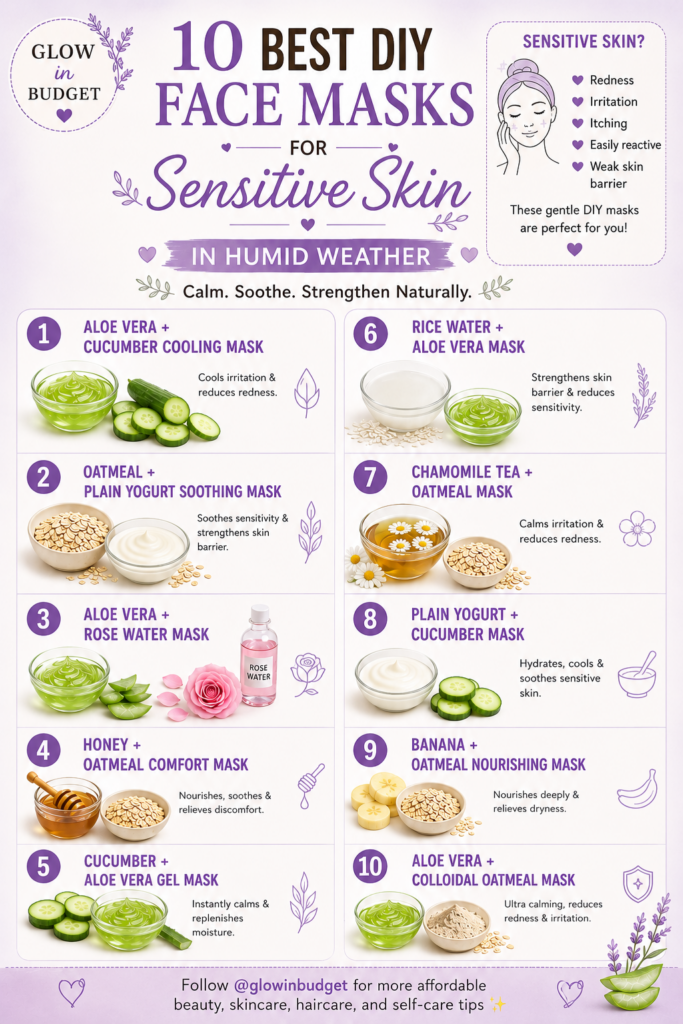
Sensitive skin needs gentle care, especially during humid weather when sweat, heat, and environmental factors can trigger irritation. These DIY face masks use calming, skin-friendly ingredients to help soothe redness, strengthen your skin barrier, and keep your complexion feeling comfortable. With a simple routine, consistent care, and the right ingredients, you can enjoy healthy, balanced skin naturally.
✨ Follow Glow In Budget
Follow @glowinbudget for more affordable beauty, skincare, haircare, and self-care tips ✨