🌿 Bonus Tips
- Apply face masks to clean skin for better absorption.
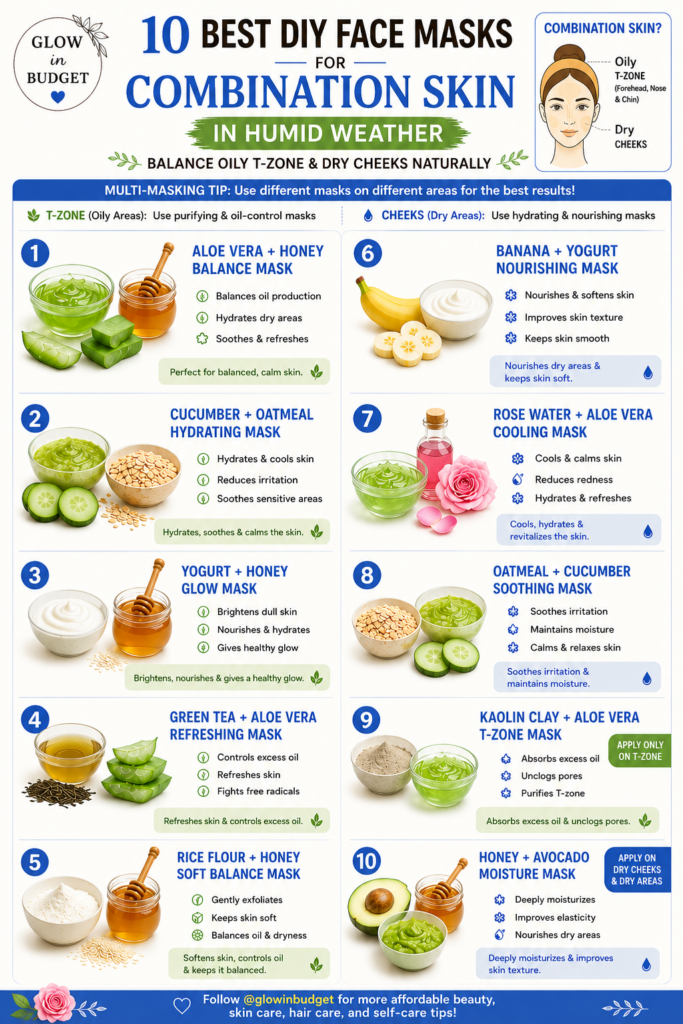
- Try multi-masking by using different masks on your T-zone and cheeks if needed.
- Use lightweight, non-comedogenic moisturizer after every face mask.
- Wash your face with lukewarm water to avoid stripping natural oils.
- Apply DIY face masks 2–3 times a week for the best results.
- Drink enough water to keep your skin hydrated from within.
- Avoid touching your face frequently to reduce oil and bacteria transfer.
- Choose gentle skincare products that won’t disrupt your skin barrier.
- Store fresh aloe vera gel in the refrigerator for a cooling effect.
- Always patch-test a new DIY recipe before applying it to your face.
❌ Common Mistakes to Avoid
- Using the same face mask on your entire face when different areas have different needs.
- Overusing clay masks, which can make dry areas even drier.
- Skipping moisturizer after using oil-control masks.
- Washing your face too often, which may increase oil production.
- Using harsh scrubs that can damage your skin barrier.
- Applying thick oils all over your face if your T-zone is already oily.
- Leaving DIY face masks on longer than recommended.
- Ignoring sunscreen, even on cloudy or humid days.
- Using expired or unclean ingredients in homemade masks.
- Expecting instant results instead of following a consistent skincare routine.
💙 Final Thoughts
Combination skin needs a balanced approach, especially during humid weather. The right DIY face masks can help control excess oil in your T-zone while keeping dry areas soft and hydrated. Whether you use one balanced mask or try multi-masking, consistency and gentle skincare are the keys to healthier, glowing skin. Choose ingredients that work for your unique skin needs and enjoy naturally balanced skin all season long.
✨ Follow CTA
Follow @glowinbudget for more affordable beauty, skincare, haircare, and self-care tips ✨