Introduction
Frizzy Hair in Humid Weather is one of the most common concerns during the rainy season. A proper Hair Care Routine for Frizzy Hair in Humid Weather begins with understanding why humidity affects your hair. As moisture levels in the air rise, the hair shaft absorbs excess water, causing the outer cuticle layer to lift. This often leaves your hair looking dry, puffy, rough, and difficult to manage. If your hair becomes frizzy as soon as you step outside, you’re certainly not alone. Fortunately, following the right routine can make Frizzy Hair in Humid Weather much easier to manage, helping your hair stay smooth, healthy, and manageable throughout the day.
Many people try to solve the problem by washing their hair more often or applying heavy oils, but these habits can sometimes make frizz even worse. The key to controlling frizz is following a consistent routine that keeps your hair hydrated, protected, and nourished without weighing it down.
In this guide, you’ll learn a complete morning, night, and weekly hair care routine designed to help reduce frizz during humid weather. We’ll also explain why hair becomes frizzy, the signs that your hair needs extra care, the best ingredients to look for, common mistakes to avoid, and simple expert tips to keep your hair smooth, healthy, and manageable every day.
Whether you have straight, wavy, curly, or chemically treated hair, these practical tips can help you build a routine that protects your hair from humidity while maintaining its natural shine and softness.
Why Does Hair Become Frizzy in Humid Weather?
For more information about maintaining healthy hair and scalp, visit the American Academy of Dermatology.
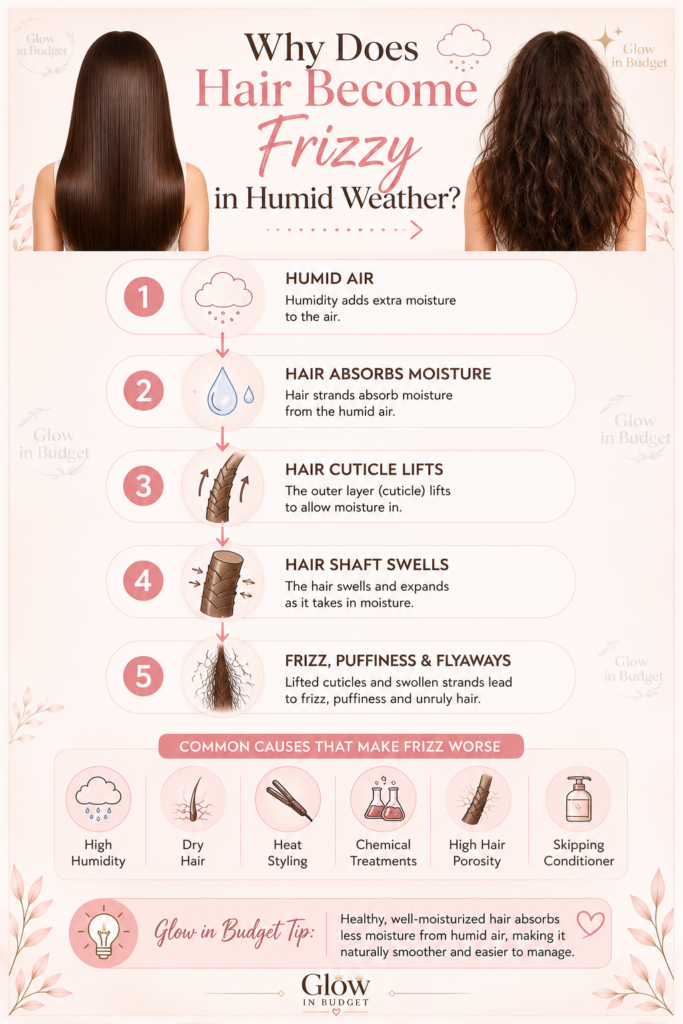
A proper morning routine can help control Frizzy Hair in Humid Weather throughout the day. Have you ever noticed that your hair looks smooth indoors but becomes puffy and difficult to manage as soon as you step outside on a humid day? This happens because hair naturally absorbs moisture from the air.
The outer layer of your hair, called the cuticle, acts like a protective shield. During humid weather, excess moisture in the air causes the cuticle to lift, allowing water molecules to enter the hair shaft. As the hair absorbs this moisture, it swells and loses its smooth structure, resulting in frizz, flyaways, and an uneven texture.
People with dry, wavy, curly, or chemically treated hair often experience more frizz because their hair cuticles are naturally more porous. Damaged hair also struggles to retain the right amount of moisture, making it even more vulnerable to humidity.
Other common factors that can make frizz worse include:
- Using harsh shampoos that strip away natural oils.
- Overwashing your hair, leaving it dry and dehydrated.
- Heat styling without a heat protectant, which damages the hair cuticle.
- Skipping conditioner, reducing moisture and smoothness.
- Rubbing wet hair with a rough towel, causing friction and breakage.
- Lack of regular deep conditioning, making hair less resilient to humidity.
The good news is that frizz can be managed with the right hair care routine. By focusing on gentle cleansing, proper hydration, and protective styling, you can keep your hair smoother, softer, and easier to manage—even during the most humid days.
Signs Your Hair Needs an Anti-Frizz Routine
Not all frizz is the same. Sometimes, occasional flyaways are normal, but if your hair feels rough, dry, or difficult to style every day, it may be a sign that your current routine isn’t providing enough hydration and protection. Recognizing these signs early can help prevent further dryness and damage.
Here are some common signs that your hair needs an anti-frizz routine:
- Your hair becomes puffy within minutes of stepping outside.
- Flyaways appear even after brushing or styling your hair.
- Your hair feels rough, dry, or coarse to the touch.
- Curls or waves lose their natural definition and become uneven.
- Hair is difficult to comb and tangles easily.
- Your hairstyle doesn’t last long in humid weather.
- The ends of your hair look dry, frayed, or split.
- Your hair lacks shine and appears dull despite regular washing.
If you notice several of these signs, it’s time to switch to a routine that focuses on hydration, gentle cleansing, and moisture retention. A consistent anti-frizz routine can help smooth the hair cuticle, reduce flyaways, and keep your hair healthier and more manageable throughout the day.
Morning Hair Care Routine for Frizzy Hair
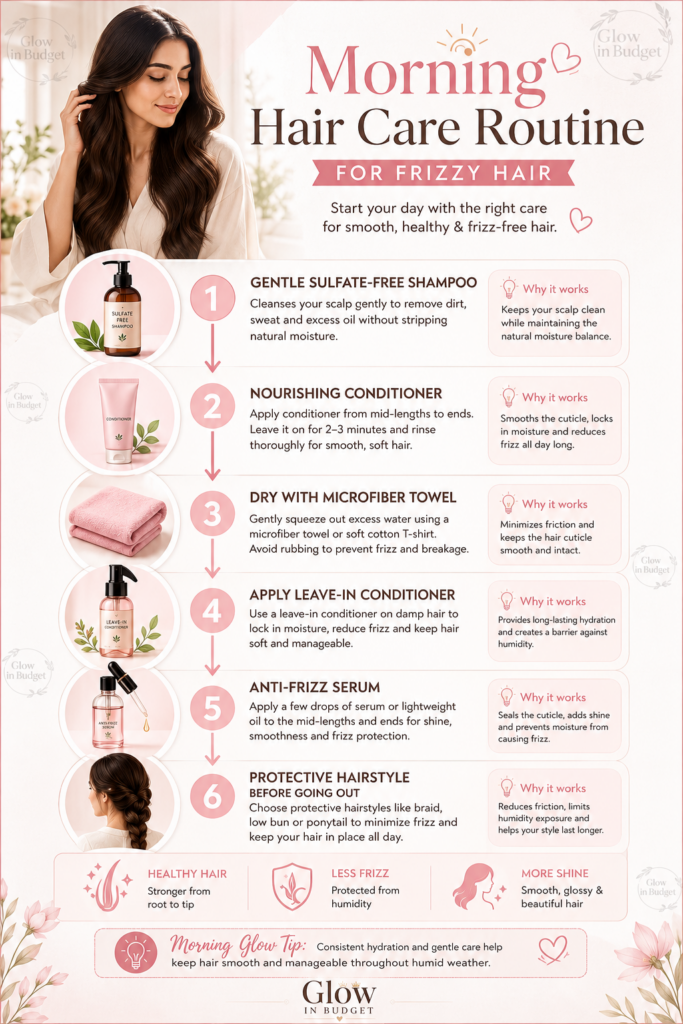
A well-planned morning hair care routine can make a big difference in how your hair looks and feels throughout the day, especially during humid weather. The goal is to gently cleanse your hair, lock in moisture, and create a protective barrier that helps prevent excess humidity from causing frizz. You don’t need expensive salon treatments—consistent care and the right techniques are often enough to keep your hair smooth and manageable. A consistent morning routine can make a big difference in controlling Frizzy Hair in Humid Weather throughout the day.
Step 1: Cleanse with a Gentle Sulfate-Free Shampoo
Start by washing your hair with a gentle sulfate-free shampoo whenever your scalp needs cleansing. Sulfate-free shampoos remove dirt, sweat, and excess oil without stripping away the natural oils that help protect your hair from dryness.
Why it works:
A mild shampoo keeps the scalp clean while maintaining your hair’s natural moisture balance, reducing the chances of frizz.
Tip: Use lukewarm water instead of hot water, as hot water can dry out your hair and lift the cuticle.
Step 2: Apply a Nourishing Conditioner
Never skip conditioner after shampooing. Apply it from the mid-lengths to the ends of your hair and leave it on for 2–3 minutes before rinsing.
Look for ingredients like:
- Argan Oil
- Shea Butter
- Aloe Vera
- Coconut Oil
- Glycerin
- Ceramides
Why it works:
Conditioner smooths the hair cuticle, seals in moisture, and makes your hair softer and easier to manage.
Step 3: Dry Your Hair Gently
Avoid rubbing your hair with a regular towel, as this creates friction and increases frizz.
Instead:
- Gently squeeze out excess water.
- Use a microfiber towel or a soft cotton T-shirt.
- Let your hair air-dry whenever possible.
Why it works:
Gentle drying reduces friction, minimizes breakage, and helps keep the hair cuticle smooth.
Step 4: Apply a Leave-In Conditioner
While your hair is still slightly damp, apply a small amount of leave-in conditioner to the mid-lengths and ends.
Why it works:
Leave-in conditioners provide lasting hydration and help protect your hair from absorbing excess moisture in humid weather.
Tip: Start with a small amount to avoid weighing your hair down.
Step 5: Use an Anti-Frizz Serum
Once your hair is about 80–90% dry, apply a few drops of an anti-frizz serum or a lightweight hair oil, such as argan oil or jojoba oil.
Why it works:
Hair serums form a protective layer around the hair shaft, helping reduce humidity-related frizz while adding shine and softness.
Step 6: Choose a Protective Hairstyle
If you’re going outdoors, consider wearing a loose braid, low bun, or ponytail to minimize exposure to humidity.
Why it works:
Protective hairstyles reduce friction, prevent tangles, and help maintain smoother-looking hair throughout the day.
Quick Morning Routine Checklist
✔️ Cleanse with a sulfate-free shampoo (when needed)
✔️ Apply conditioner after every wash
✔️ Dry hair gently with a microfiber towel
✔️ Use a leave-in conditioner
✔️ Apply an anti-frizz serum
✔️ Wear a protective hairstyle if spending time outdoors
💡 Glow in Budget Tip
Consistency is more important than using expensive products. Following a simple morning routine every day can gradually improve your hair’s texture, reduce frizz, and make it easier to style—even during the most humid weather.
If your scalp becomes oily during the rainy season while your hair feels dry at the ends, don’t miss our Hair Care Routine for Oily Hair in Humid Weather for tips to keep your scalp fresh and balanced.
Night Hair Care Routine for Frizzy Hair
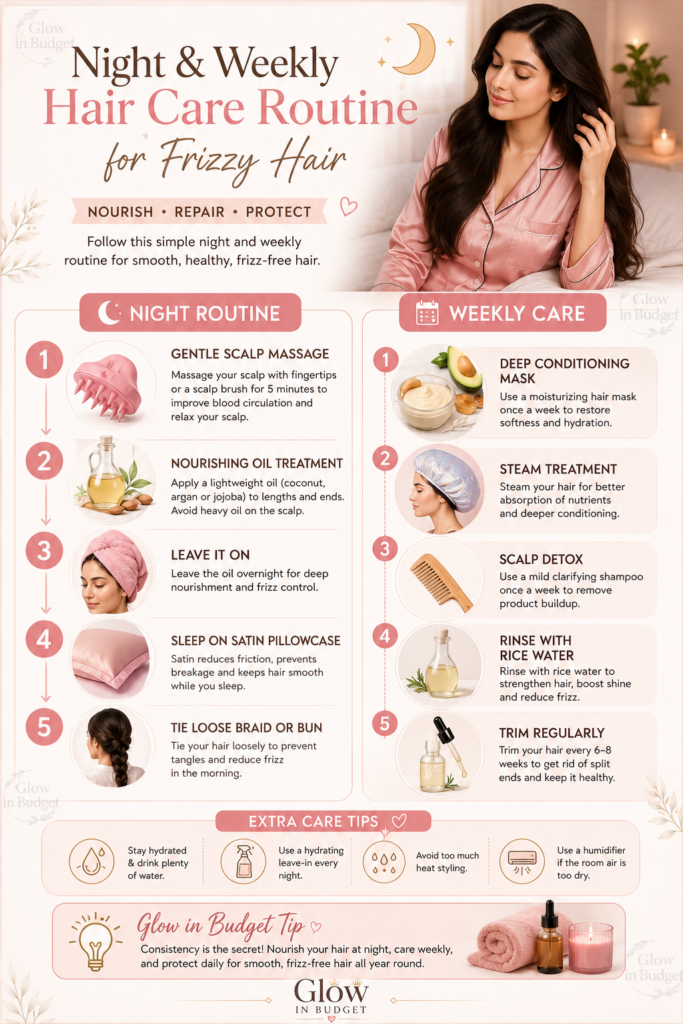
Night care is just as important for reducing Frizzy Hair in Humid Weather.Your hair repairs and restores itself while you sleep, making your nighttime routine just as important as your morning routine. Simple habits before bedtime can help reduce friction, prevent moisture loss, and protect your hair from becoming frizzy the next day. Spending just 5–10 minutes on your hair every night can make it softer, smoother, and easier to manage over time.
Step 1: Detangle Your Hair Gently
Before going to bed, gently remove knots using a wide-tooth comb or your fingers. Always start from the ends and gradually work your way up to the roots.
Why it works:
Detangling before bed prevents hair breakage, reduces friction while sleeping, and minimizes morning tangles.
Tip: Never forcefully pull through knots, as this can weaken the hair and cause unnecessary breakage.
Step 2: Apply a Lightweight Hair Serum (If Needed)
If your hair feels particularly dry or frizzy, apply a small amount of lightweight serum or nourishing hair oil to the mid-lengths and ends.
Why it works:
This helps seal in moisture overnight and reduces dryness caused by air conditioning or dry indoor environments.
Tip: Use only a few drops to avoid making your hair greasy.
Step 3: Tie Your Hair in a Loose Protective Hairstyle
Leaving your hair completely open while sleeping can create friction and tangles. Instead, loosely tie your hair in:
- A loose braid
- A low ponytail
- A loose bun secured with a soft silk or satin scrunchie
Why it works:
Protective hairstyles reduce hair movement, minimize friction, and help maintain smoother hair by morning.
Step 4: Sleep on a Satin or Silk Pillowcase
Cotton pillowcases absorb moisture from your hair and create friction throughout the night. Switching to a satin or silk pillowcase helps your hair glide smoothly while you sleep.
Why it works:
Less friction means fewer tangles, reduced breakage, and better moisture retention, resulting in smoother, shinier hair.
Budget Tip: If a satin pillowcase isn’t available, wrap your hair with a soft satin scarf before sleeping.
Step 5: Never Sleep with Wet Hair
Going to bed with wet hair weakens the hair shaft and increases friction against your pillow, making hair more prone to frizz and breakage.
Why it works:
Allowing your hair to dry completely before sleeping helps protect the cuticle and reduces damage.
Tip: If you wash your hair at night, let it air dry or use a cool setting on your hair dryer before bedtime.
Night Routine Checklist
✔️ Detangle your hair gently
✔️ Apply a lightweight serum if needed
✔️ Tie your hair in a loose braid or bun
✔️ Sleep on a satin or silk pillowcase
✔️ Never sleep with wet hair
🌙 Glow in Budget Expert Tip
Your nighttime routine doesn’t have to be complicated. Just a few simple habits can help reduce frizz, prevent breakage, and make your hair much easier to manage the next morning. Healthy hair is built through consistent daily care—not overnight miracles.
Weekly Hair Care Routine for Frizzy Hair
A weekly treatment schedule helps prevent Frizzy Hair in Humid Weather from becoming worse.While your daily routine helps control frizz, your weekly routine focuses on repairing damage, restoring moisture, and strengthening your hair. Taking a little extra time once or twice a week can improve your hair’s texture, reduce breakage, and make it more resistant to humid weather.
If your hair also feels dry and brittle, our Hair Care Routine for Dry Hair in Humid Weather offers extra hydration tips to restore softness.
Step 1: Deep Condition Your Hair
Deep conditioning is one of the most effective ways to restore moisture to dry and frizzy hair. Use a deep conditioning mask or a rich hair mask once or twice a week, depending on your hair’s condition.
Apply the mask from the mid-lengths to the ends, leave it on for 15–20 minutes, and rinse thoroughly with cool or lukewarm water.
Why it works:
Deep conditioning replenishes lost moisture, smooths the hair cuticle, and improves softness and shine.
Step 2: Give Your Hair a Nourishing Oil Massage
A gentle oil massage once a week can help nourish both your scalp and hair. Choose lightweight oils such as:
- Coconut Oil
- Argan Oil
- Almond Oil
- Jojoba Oil
Massage the oil into your scalp using gentle circular motions, then apply the remaining oil to the lengths of your hair. Leave it on for 30–60 minutes before washing.
Why it works:
Hair oiling helps reduce dryness, improves flexibility, and adds natural shine while protecting your hair from moisture loss.
Step 3: Use a Hydrating Hair Mask
In addition to conditioner, use a hydrating hair mask weekly to give your hair an extra boost of nourishment.
Look for masks containing ingredients like:
- Aloe Vera
- Shea Butter
- Keratin
- Hyaluronic Acid
- Glycerin
- Ceramides
Why it works:
Hair masks provide intensive hydration, making your hair smoother, softer, and less prone to frizz.
Step 4: Trim Split Ends Regularly
Split ends make frizz more noticeable and can travel further up the hair shaft if left untreated.
Aim to trim your hair every 8–12 weeks to keep the ends healthy and reduce breakage.
Why it works:
Regular trims improve the overall appearance of your hair and help maintain a smoother texture.
Step 5: Reduce Heat Styling
Try to give your hair a break from straighteners, curling irons, and high-heat blow dryers at least a few days each week.
If you need to use heat styling tools, always apply a heat protectant beforehand.
Why it works:
Reducing heat damage helps preserve the hair cuticle, making your hair stronger and less likely to become frizzy. Following a weekly routine is one of the best ways to prevent Frizzy Hair in Humid Weather and maintain healthy-looking hair.
Weekly Hair Care Checklist
✔️ Deep condition your hair once or twice a week
✔️ Massage your scalp with nourishing oil
✔️ Apply a hydrating hair mask
✔️ Trim split ends every 8–12 weeks
✔️ Minimize heat styling and always use a heat protectant
💡 Glow in Budget Expert Tip
Consistency is the secret to healthier hair. A simple weekly routine, combined with your daily morning and night care, can gradually reduce frizz, improve shine, and make your hair more manageable—even during humid weather.
Best Ingredients for Frizzy Hair
Choosing the right hair care products is just as important as following a consistent routine. Instead of buying products based only on advertisements or attractive packaging, focus on the ingredients they contain. The right ingredients help hydrate the hair, smooth the cuticle, reduce frizz, and protect your hair from humidity.
Here are some of the best ingredients to look for if you have frizzy hair:
1. Argan Oil
Often called “liquid gold,” argan oil is rich in vitamin E and essential fatty acids that deeply nourish the hair without making it feel heavy.
Benefits:
- Smooths the hair cuticle
- Reduces frizz and flyaways
- Adds natural shine
- Improves softness
Best for: Dry, frizzy, and damaged hair.
2. Shea Butter
Shea butter is an excellent natural moisturizer that helps lock in hydration and protects hair from dryness caused by humid weather.
Benefits:
- Deeply moisturizes hair
- Reduces roughness
- Helps prevent breakage
- Improves manageability
Best for: Thick, curly, and coarse hair.
3. Aloe Vera
Aloe vera provides lightweight hydration without making the hair greasy. It also helps soothe the scalp and improve overall hair health.
Benefits:
- Hydrates dry hair
- Soothes the scalp
- Reduces frizz
- Adds softness and shine
Best for: All hair types.
4. Coconut Oil
Coconut oil is known for its ability to penetrate the hair shaft and reduce protein loss, making hair stronger and less prone to damage.
Benefits:
- Strengthens hair
- Reduces dryness
- Minimizes split ends
- Improves hair elasticity
Best for: Dry and damaged hair.
5. Glycerin
Glycerin is a humectant that attracts moisture to the hair. When used in balanced formulas, it helps keep hair hydrated and soft.
Benefits:
- Maintains moisture balance
- Reduces dryness
- Improves softness
- Makes hair easier to manage
Best for: Normal to dry hair.
6. Ceramides
Ceramides help repair and strengthen the hair’s protective barrier, making it more resistant to humidity and environmental damage.
Benefits:
- Strengthens the hair cuticle
- Reduces breakage
- Improves smoothness
- Protects against humidity
Best for: Chemically treated and damaged hair.
7. Hyaluronic Acid
Although commonly used in skincare, hyaluronic acid is also found in many hair care products because it helps retain moisture and improve hair hydration.
Benefits:
- Boosts moisture levels
- Reduces dryness
- Improves hair elasticity
- Leaves hair feeling softer
Best for: Dry, dehydrated, and frizzy hair.
Ingredients to Avoid If You Have Frizzy Hair
Some ingredients may make frizz worse by drying out your hair or causing product buildup. If possible, limit products that contain:
- Harsh sulfates (such as Sodium Lauryl Sulfate)
- High amounts of drying alcohols
- Excessive artificial fragrances
- Heavy waxes that leave buildup
- Low-quality mineral oils in products that feel greasy
Always read the ingredient list before buying a new hair care product. Choosing nourishing ingredients that suit your hair type can make a noticeable difference in reducing frizz and keeping your hair healthier over time.
💡 Glow in Budget Tip
You don’t always need the most expensive hair care products. A budget-friendly product with nourishing ingredients like argan oil, aloe vera, ceramides, or shea butter can often deliver better results than a costly product with harsh or drying ingredients.
How to Choose the Right Hair Products for Frizzy Hair
Walking into a beauty store or browsing online can feel overwhelming because there are hundreds of hair care products claiming to eliminate frizz. However, the secret isn’t buying the most expensive product—it’s choosing products that match your hair type, scalp condition, and specific hair concerns.
Instead of following trends or advertisements, focus on understanding what your hair actually needs. Reading the ingredient list and selecting products with moisturizing and nourishing ingredients can make a noticeable difference in controlling frizz.
1. Choose a Gentle Shampoo
Your shampoo should clean your scalp without stripping away its natural oils.
Look for:
- Sulfate-free formulas
- Aloe Vera
- Coconut Oil
- Argan Oil
- Glycerin
Avoid:
- Harsh sulfates (if they leave your hair feeling dry)
- Products that make your hair feel rough after washing
2. Pick a Moisturizing Conditioner
Conditioner is essential for smoothing the hair cuticle and locking in moisture.
Choose conditioners that contain:
- Shea Butter
- Ceramides
- Argan Oil
- Coconut Oil
- Aloe Vera
A good conditioner should leave your hair soft, smooth, and easy to detangle.
3. Use a Lightweight Leave-In Conditioner
Leave-in conditioners provide all-day hydration and help create a protective barrier against humidity.
They’re especially helpful if your hair becomes frizzy within a few hours of washing.
4. Select an Anti-Frizz Serum
Hair serums help coat the hair shaft, reducing moisture absorption from the air while adding shine.
Look for serums containing:
- Argan Oil
- Jojoba Oil
- Silicone alternatives or lightweight smoothing ingredients
Apply only a small amount to the mid-lengths and ends to avoid a greasy appearance.
5. Use a Weekly Hair Mask
A hydrating hair mask provides deeper nourishment than a regular conditioner.
Look for ingredients such as:
- Shea Butter
- Keratin
- Aloe Vera
- Ceramides
- Hyaluronic Acid
Using a hair mask once or twice a week can improve softness and reduce frizz over time.
6. Match Products to Your Hair Type
Different hair types have different needs.
| Hair Type | What to Look For |
|---|---|
| Fine Hair | Lightweight, non-greasy formulas |
| Thick Hair | Rich conditioners and nourishing masks |
| Curly Hair | Deep hydration and curl-friendly creams |
| Chemically Treated Hair | Repairing ingredients like ceramides and proteins |
| Dry Hair | Moisturizing oils and hydrating conditioners |
Choosing products based on your hair type can often give better results than following general recommendations.
🌿 Glow in Budget Tip
Before buying a new product, read the ingredient list instead of relying only on marketing claims. Products with nourishing ingredients that suit your hair type often deliver better long-term results than expensive products that don’t address your hair’s specific needs.
Bonus Tips for Managing Frizzy Hair
In addition to following a consistent morning, night, and weekly routine, a few small habits can make a big difference in keeping your hair smooth and manageable during humid weather.
- 🌿 Drink enough water every day to keep your hair hydrated from within.
- 🥗 Eat a balanced diet rich in protein, healthy fats, vitamins, and minerals to support healthy hair growth.
- 🚿 Avoid washing your hair every day unless your scalp becomes excessively oily.
- 💨 Limit heat styling and always apply a heat protectant before using styling tools.
- ✂️ Trim split ends every 8–12 weeks to prevent further damage and reduce frizz.
- 🧴 Use a wide-tooth comb instead of a fine-tooth comb to minimize breakage.
- ☀️ Protect your hair from direct sunlight by wearing a hat or scarf when spending long hours outdoors.
- 💤 Sleep on a satin or silk pillowcase to reduce friction and prevent morning frizz.
- 💆 Massage your scalp once a week to improve blood circulation and support healthy hair.
- ⏳ Be patient and consistent—healthy hair doesn’t change overnight. Following a routine regularly will give the best long-term results.
🌿 Glow in Budget Tip
Small, consistent habits often have a greater impact than expensive salon treatments. Focus on caring for your hair every day, and you’ll gradually notice smoother, healthier, and more manageable hair.
Common Mistakes to Avoid
Avoiding these mistakes makes managing Frizzy Hair in Humid Weather much easier.Even the best hair care products won’t deliver great results if certain habits are damaging your hair every day. Avoiding these common mistakes can help reduce frizz, prevent breakage, and keep your hair healthier during humid weather.
❌ Washing your hair with very hot water, which strips away natural oils and raises the hair cuticle.
❌ Skipping conditioner after shampooing, leaving your hair dry and more prone to frizz.
❌ Rubbing wet hair with a regular towel, creating friction that leads to breakage and flyaways.
❌ Brushing or combing hair aggressively while it’s wet, when hair is at its weakest.
❌ Using heat styling tools too often without applying a heat protectant.
❌ Applying too much hair serum or oil, which can weigh hair down and make it look greasy instead of smooth.
❌ Sleeping with wet hair, increasing the risk of tangles, breakage, and frizz.
❌ Ignoring split ends instead of trimming them regularly.
❌ Choosing products based only on advertisements without checking the ingredient list.
❌ Expecting overnight results. Healthy, frizz-free hair requires consistent care and patience.
💡 Glow in Budget Tip
Healthy hair is built through small, consistent habits—not quick fixes. By avoiding these common mistakes and following a simple daily routine, you’ll gradually notice smoother, shinier, and more manageable hair, even during humid weather.
Frequently Asked Questions (FAQs)
1. How can I control Frizzy Hair in Humid Weather naturally?
Humidity causes your hair to absorb excess moisture from the air. This lifts the outer hair cuticle, making the hair shaft swell and resulting in frizz, flyaways, and puffiness. Hair that is dry, damaged, or naturally curly tends to be more affected by humidity.
2. How often should I wash frizzy hair in humid weather?
There isn’t a one-size-fits-all answer. Wash your hair based on your scalp’s needs rather than following a fixed schedule. Most people with frizzy hair benefit from washing their hair 2–3 times a week using a gentle sulfate-free shampoo.
3. Which ingredients are best for controlling frizz?
Look for products containing moisturizing and nourishing ingredients such as:
- Argan Oil
- Shea Butter
- Aloe Vera
- Coconut Oil
- Ceramides
- Glycerin
- Hyaluronic Acid
These ingredients help hydrate the hair, smooth the cuticle, and improve manageability.
4. Can I apply hair oil every day to reduce frizz?
Lightweight hair oils or serums can be applied in small amounts to the mid-lengths and ends if your hair feels dry. However, applying large amounts of oil every day may make your hair look greasy and weigh it down.
5. Is air-drying better than blow-drying for frizzy hair?
Air-drying is generally gentler on the hair because it avoids heat damage. If you prefer using a hair dryer, use the cool or low-heat setting and always apply a heat protectant beforehand.
6. Can frizzy hair be completely cured?
Frizz cannot always be completely eliminated, especially in humid weather, but it can be effectively managed with a consistent hair care routine, proper hydration, gentle hair care habits, and the right products.
Humidity can also increase hair shedding for some people. Read our Hair Fall in Humid Weather: Causes, Prevention & Care Tips to learn how to reduce seasonal hair fall.
Final Thoughts
Managing frizzy hair during humid weather doesn’t require expensive salon treatments or a complicated routine. The key is understanding why frizz happens and building simple daily habits that help protect your hair from excess moisture. By following a gentle morning, night, and weekly hair care routine, you can keep your hair healthier, smoother, and easier to manage throughout the season.
Remember that every hair type is unique, so it may take some time to find the products and routine that work best for you. Focus on choosing nourishing ingredients, avoiding harsh hair care habits, and staying consistent with your routine. Small improvements made every day often lead to healthier, stronger, and shinier hair over time.
Whether you have straight, wavy, curly, or chemically treated hair, regular hydration, proper conditioning, and gentle handling can significantly reduce frizz and improve your hair’s overall appearance. Healthy hair is a journey, and consistency is the secret to long-lasting results. With the right products and a consistent routine, managing Frizzy Hair in Humid Weather becomes much easier, helping your hair stay smooth, healthy, and manageable every day. Remember, caring for Frizzy Hair in Humid Weather doesn’t require expensive products. Consistency and the right routine are the keys to healthier, smoother hair.
If your scalp becomes greasy quickly during the rainy season, your hair may need a different routine. Read our Hair Care Routine for Oily Hair in Humid Weather to learn simple morning, night, and weekly tips for keeping oily hair fresh, clean, and healthy.
Follow Glow In Budget
Found this guide helpful?
Follow @glowinbudget for more affordable beauty, skincare, hair care, and self-care tips. We regularly share practical routines, expert-backed advice, and budget-friendly solutions to help you look and feel your best—without overspending.