
Introduction
Hair fall can be frustrating, especially when you start noticing more hair on your pillow, comb, shower floor, or clothes. While some daily shedding is normal, noticeable or persistent hair fall can have many possible causes.
Noticing more hair fall during hot and humid weather can be frustrating, especially when you find extra strands on your pillow, hairbrush, or shower drain. But humidity itself isn’t necessarily the direct cause of hair loss. Changes in scalp conditions, sweating, buildup, tangling, and increased hair breakage can all make the problem more noticeable.
Hair fall in humid weather can also become harder to manage when the scalp becomes sweaty or oily while the lengths become tangled and difficult to handle. Frequent washing, rough towel drying, tight hairstyles, and excessive heat styling may add further stress to the hair.
The good news is that a simple, consistent routine can help you care for your scalp and reduce avoidable breakage. In this guide, we’ll look at the common reasons hair fall may seem worse in humid weather and share practical morning, night, and weekly hair-care habits to help keep your hair healthier and easier to manage.
✨ Glow in Budget Expert Tip
Before changing your entire hair-care routine, first identify whether you’re dealing mainly with shedding, breakage, or scalp buildup. The right solution depends on what’s actually happening to your hair.
Why Hair Fall May Seem Worse in Humid Weather
Humid weather can change how your scalp and hair behave. While humidity itself doesn’t automatically cause hair loss, the combination of sweat, oil, buildup, tangling, and hair breakage can make shedding appear more noticeable.
1. Increased Sweat and Scalp Oil
Hot, humid weather can make you sweat more. Sweat mixed with scalp oil, styling products, and environmental dirt can leave the scalp feeling greasy or uncomfortable.
If buildup isn’t properly removed, your scalp may feel heavy or irritated, making your hair-care routine more difficult.
2. More Hair Breakage
Humidity can make some hair types swell and become harder to manage. When hair becomes tangled, repeated brushing or pulling can cause strands to snap.
This is breakage, rather than hair shedding from the root, but it can still make your hair appear thinner.
3. More Tangling and Friction
Frizz and increased moisture can cause strands to rub against each other and become tangled.
Trying to force a comb through tangled hair can create unnecessary tension and lead to additional breakage.
4. Frequent Washing
Some people wash their hair more often during humid weather because of sweating and oiliness.
Washing itself doesn’t cause hair loss when done properly, but harsh shampoos, very hot water, aggressive scrubbing, or rough towel drying can make the hair lengths more vulnerable to breakage.
5. Tight Hairstyles
When the weather is hot, you may naturally want to tie your hair up more often.
However, repeatedly wearing very tight ponytails, buns, or other hairstyles can put tension on the hair. Gentle, looser hairstyles are a better everyday choice.
6. Heat Styling
Using straighteners, curling irons, or high-heat blow-drying frequently can contribute to dryness and damage.
Damaged hair breaks more easily, which can sometimes be mistaken for increased hair fall.
✨ Glow in Budget Expert Tip
Before blaming humidity for your hair fall, look closely at the strands you’re losing. A strand with a small bulb-shaped root at one end is different from a shorter broken piece. Understanding the difference can help you choose a more appropriate hair-care approach.
Signs Your Hair Fall Needs Extra Attention
Some daily shedding is normal, but certain changes may indicate that your hair needs more attention. Humid weather can make hair easier to tangle and break, so it’s important to distinguish ordinary shedding from ongoing or unusual hair loss.
1. You Notice Significantly More Hair Than Usual
If you consistently notice much more hair on your pillow, clothing, brush, or shower drain than you normally do, keep track of the change rather than assuming humidity is responsible.
2. Your Hair Part Looks Wider
A gradually widening part or increased visibility of the scalp may be more significant than simply finding a few extra strands after washing.
3. Your Ponytail Feels Thinner
If your ponytail circumference seems noticeably smaller over time, it may be worth paying attention to the change rather than relying only on how much hair you see in the shower.
4. You See More Broken Pieces
Short, uneven strands without a visible root may indicate hair breakage rather than shedding from the scalp.
Frequent detangling, rough towel drying, heat styling, and tight hairstyles can all contribute to breakage.
5. Your Scalp Feels Itchy or Irritated
Persistent itching, redness, scaling, or discomfort shouldn’t simply be blamed on humid weather. Sweat and buildup may contribute to scalp discomfort, but ongoing symptoms deserve proper attention.
6. Hair Loss Continues Beyond a Temporary Change
If increased shedding continues for weeks or becomes progressively worse, consider speaking with a dermatologist or other qualified healthcare professional rather than relying only on cosmetic hair-care products.
✨ Glow in Budget Expert Tip
Take a monthly photo of your hair part and overall density in similar lighting. It can be much easier to notice gradual changes this way than by judging the amount of hair in your brush each day.
Important: Significant, sudden, patchy, or persistent hair loss can have many causes unrelated to humidity. A dermatologist can help determine the underlying cause and appropriate treatment.
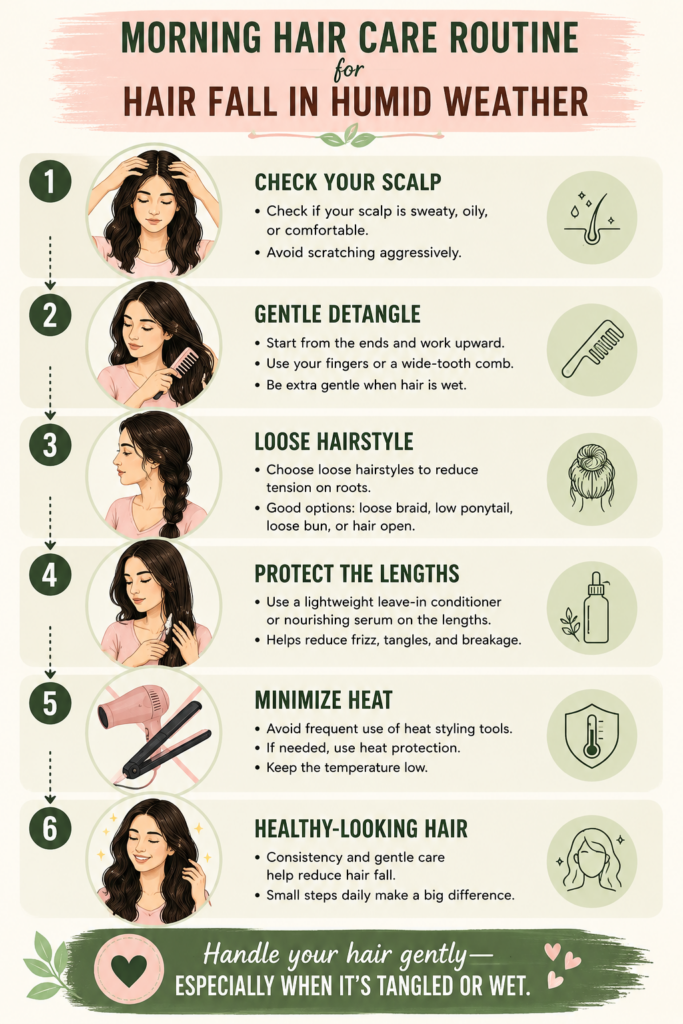
Morning Hair Care Routine for Hair Fall in Humid Weather
A good morning routine should focus on keeping the scalp comfortable, minimizing unnecessary pulling, and protecting the hair from breakage. You don’t need a complicated collection of products.
Step 1: Check Your Scalp
Before styling, notice how your scalp feels.
- If it’s sweaty or oily, plan your wash according to your scalp’s needs.
- If it feels comfortable and clean, there’s no need to wash simply because the weather is humid.
- Avoid scratching an itchy scalp aggressively.
Step 2: Detangle Gently
If your hair is tangled, don’t pull a brush through it forcefully.
- Start from the ends.
- Work upward gradually.
- Use your fingers or a suitable wide-tooth comb when appropriate.
- Be especially gentle when hair is wet because wet strands can be more vulnerable to stretching and breakage.
Step 3: Keep Styling Simple
Choose loose hairstyles that don’t place continuous tension on the roots.
Good everyday options include:
- Loose braid
- Low, relaxed ponytail
- Loose bun
- Hair left open when practical
Avoid repeatedly wearing very tight hairstyles.
Step 4: Protect the Lengths
If your hair tends to become dry, tangled, or frizzy in humid weather, use a lightweight leave-in conditioner or other suitable conditioning product on the lengths.
This can make the hair easier to detangle and may help reduce mechanical breakage.
Step 5: Minimize Heat
If possible, reduce frequent use of straighteners, curling irons, and high-heat blow-drying.
When heat styling is necessary, use appropriate heat protection and avoid excessive temperatures.
✨ Glow in Budget Expert Tip
Don’t treat every extra strand as a reason to wash or brush more. A gentle routine that reduces pulling and breakage is often more useful than repeatedly manipulating your hair throughout the day.
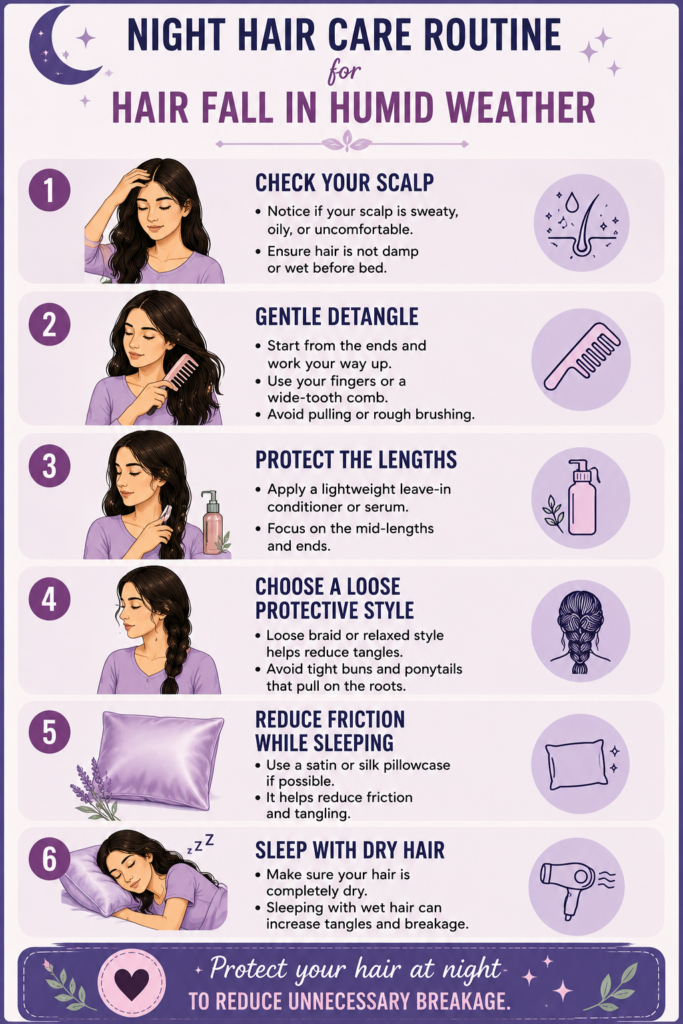
Night Hair Care Routine for Hair Fall in Humid Weather
Night-time care is mainly about reducing friction, tangling, and unnecessary tension while your hair rests. A simple routine can help protect the lengths from avoidable breakage.
Step 1: Check Your Hair and Scalp
Before going to bed, notice whether your scalp feels sweaty, oily, or uncomfortable.
If your hair is damp from sweating or washing, allow it to dry properly before sleeping.
Step 2: Detangle Gently
If your hair is tangled, work through the knots gently rather than pulling them apart.
- Start at the ends.
- Move gradually toward the roots.
- Use your fingers or a suitable wide-tooth comb.
- Avoid aggressive brushing.
Step 3: Protect the Lengths
If your lengths feel dry or prone to tangling, apply a small amount of a suitable leave-in conditioner or lightweight conditioning product.
You don’t need to coat your entire head with multiple products.
Step 4: Choose a Loose Protective Style
For longer hair, a loose braid or relaxed hairstyle can reduce overnight tangling.
Avoid tight buns, tight ponytails, or hairstyles that pull continuously on the roots.
Step 5: Reduce Friction While Sleeping
A smooth pillowcase or a gentle hair-protection method can help reduce friction between your hair and the pillow.
The goal is to minimize pulling and tangling—not to keep your hair tightly secured.
Step 6: Let Damp Hair Dry
Going to bed with soaking-wet hair can increase tangling and make hair more difficult to handle the next morning.
Whenever possible, allow your hair to dry before sleeping.
✨ Glow in Budget Expert Tip
Your night routine doesn’t need five different products. Gentle detangling, a loose hairstyle, and reducing friction can often be more valuable than adding another treatment.
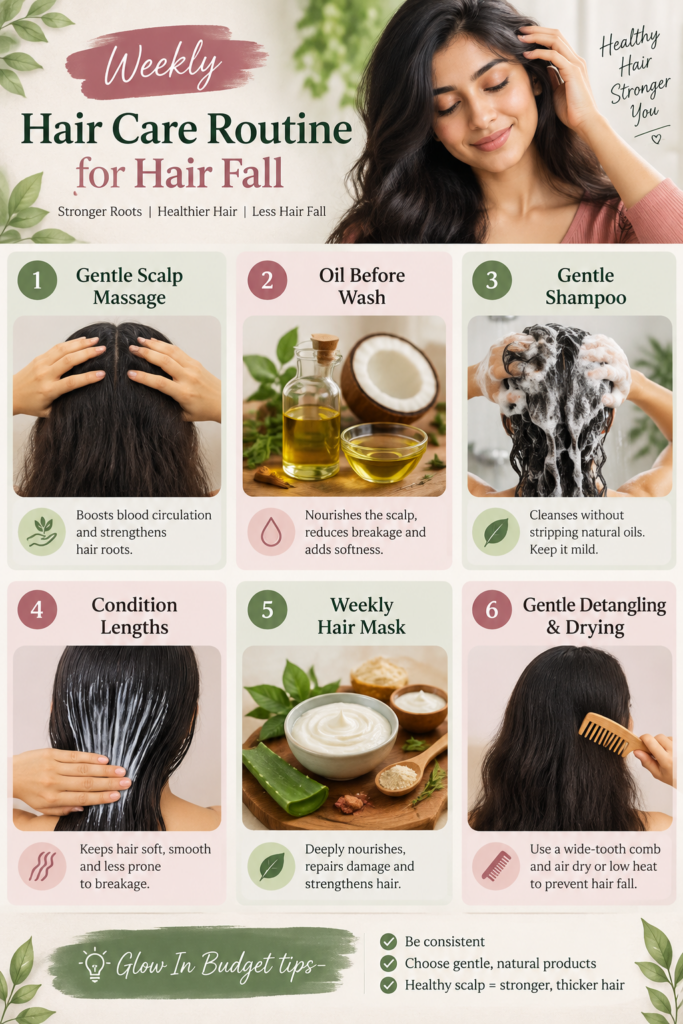
Weekly Hair Care Routine for Hair Fall
Your weekly routine should focus on keeping the scalp clean, reducing unnecessary hair breakage, and maintaining moisture in the lengths. You don’t need a complicated routine or expensive products. Follow these simple steps consistently and adjust them according to your scalp and hair type.
1. Scalp Care & Gentle Massage
Before washing your hair, spend a few minutes gently massaging your scalp with your fingertips. Use the pads of your fingers rather than your nails and apply light, comfortable pressure.
- Massage the scalp for about 3–5 minutes.
- Move your fingertips in small circular motions rather than rubbing aggressively.
- Avoid scratching, pulling, or twisting the hair.
- If your scalp is irritated, painful, or very sensitive, skip the massage.
How often: Once or twice a week, depending on your scalp and washing routine.
2. Hair Oiling Before Wash
If oiling works well for your hair, apply a small amount to the scalp and hair lengths before washing. You don’t need to soak your hair in oil.
- Divide your hair into a few sections.
- Apply a small amount of oil to the scalp using your fingertips.
- Gently massage without rubbing or pulling the hair.
- Apply a little oil to the mid-lengths and ends if they feel dry.
- Leave it on for around 30–60 minutes before washing.
- Wash thoroughly with a gentle shampoo.
Important: If oiling makes your scalp itchy, greasy, or uncomfortable, you can skip scalp oiling and simply use conditioner on the lengths after shampooing.
3. Gentle Hair Wash
A clean scalp is an important part of basic hair care. Wash your hair according to how quickly your scalp becomes oily or dirty rather than following a fixed number of wash days.
If you have an oily scalp or experience frequent buildup, you may also find our Hair Care Routine for Oily Hair helpful for choosing a washing routine that suits your scalp.
- Wet your scalp and hair completely with lukewarm water.
- Apply shampoo mainly to the scalp, not the entire length.
- Massage gently with your fingertips.
- Let the shampoo rinse through the lengths instead of vigorously rubbing them.
- Rinse thoroughly so no product remains on the scalp.
- Repeat shampooing only if your scalp is still oily or has significant product buildup.
How often: Usually 2–3 times a week, but oily scalps may need more frequent washing while very dry scalps may need less.
4. Conditioning the Hair Lengths
Conditioner helps make the hair easier to manage and can reduce friction and breakage while detangling.
- Apply conditioner from the mid-lengths to the ends.
- Avoid applying a heavy amount directly to the scalp unless the product is specifically designed for scalp use.
- Leave it on for the time recommended on the product.
- Rinse thoroughly with cool or lukewarm water.
- Don’t aggressively squeeze or rub wet hair.
How often: Every time you shampoo, especially if your hair is dry, tangled, or prone to breakage.
If your hair lengths are particularly dry or prone to breakage, our Hair Care Routine for Dry Hair can help you build a more suitable moisture-focused routine.
5. Weekly Hair Mask
A hair mask can be useful when your hair feels particularly dry, rough, or difficult to manage. Choose a simple moisturizing mask rather than using multiple treatments at once.
- Apply the mask mainly to the lengths and ends.
- Follow the product’s recommended application time.
- Rinse thoroughly.
- Avoid combining several strong treatments on the same day.
- If your hair becomes heavy or greasy after using masks, reduce the amount or frequency.
How often: Once a week is enough for most people.
6. Gentle Detangling & Drying
How you handle your hair after washing can make a big difference in preventing unnecessary breakage.
- Use a soft towel or cotton T-shirt to gently squeeze out excess water.
- Don’t vigorously rub wet hair.
- Allow your hair to become partially dry before detangling if it is very fragile.
- Start detangling from the ends and gradually work upward.
- Use a wide-tooth comb or a gentle detangling brush.
- Avoid tight hairstyles while the hair is wet.
- Let your hair dry naturally when practical, or use heat on a lower setting if needed.
✨ Glow in Budget Expert Tip
You don’t need to complete a long list of treatments every week. A clean scalp, gentle washing, regular conditioning, careful detangling, and avoiding unnecessary pulling or heat are the priorities. Choose only the steps your hair actually needs rather than buying multiple products.
Remember: A weekly hair-care routine can help reduce breakage and improve the condition of your hair, but persistent or sudden hair loss may have causes that routine hair care cannot address.
10 Bonus Tips for Managing Hair Fall
Your main hair-care routine becomes more effective when you support it with simple everyday habits. These bonus tips focus on reducing unnecessary hair breakage, protecting your scalp and hair, and making your routine easier to maintain consistently. You don’t need expensive products or complicated treatments—small changes in how you wash, dry, style, and handle your hair can make a meaningful difference.
1. Avoid Tight Hairstyles
Frequently wearing very tight ponytails, buns, braids, or other hairstyles that pull firmly on the hair can increase tension on the hair shaft and scalp.
- Choose loose hairstyles whenever possible.
- Use soft, fabric-covered hair ties.
- Avoid repeatedly tying your hair in exactly the same position.
- Give your hair a break from tight styles, especially when you’re at home or sleeping.
Glow in Budget Expert Tip: A loose braid or low ponytail is often a simple, budget-friendly alternative when you want to keep long hair controlled without excessive pulling.
2. Be Gentle With Wet Hair
Wet hair is more vulnerable to stretching and breakage, so avoid rough handling immediately after washing.
- Don’t vigorously rub your hair with a towel.
- Gently squeeze out excess water.
- Use a soft towel or cotton T-shirt if you prefer.
- Detangle carefully, starting from the ends and working upward.
Glow in Budget Expert Tip: You don’t need a special expensive hair towel. A clean, soft cotton T-shirt can be a practical alternative for gently removing excess water.
If frizz and roughness are also concerns, see our guide to Hair Care for Frizzy Hair for additional ways to handle and protect the hair.
3. Limit Excessive Heat Styling
Frequent use of high heat can make hair dry, brittle, and more prone to breakage.
- Keep heat styling for occasions when you actually need it.
- Use the lowest effective temperature.
- Apply a suitable heat-protectant product before using hot tools.
- Avoid repeatedly passing a straightener or curling tool over the same section.
Glow in Budget Expert Tip: If you’re trying to save money and protect your hair, reducing unnecessary heat use can be more useful than buying multiple repair products afterward.
4. Keep Your Scalp Clean
A clean scalp is an important part of basic hair care. Allowing sweat, oil, dead skin, or styling-product buildup to remain on the scalp for too long can make it uncomfortable and may contribute to irritation.
- Wash according to your scalp’s needs.
- Focus shampoo on the scalp rather than aggressively scrubbing the lengths.
- Rinse thoroughly.
- Don’t delay washing simply because you are trying to follow a fixed schedule.
Glow in Budget Expert Tip: Your scalp doesn’t need to feel extremely “squeaky clean” after washing. Gentle cleansing without excessive scrubbing is usually a better approach.
5. Don’t Overuse Hair Products
Using multiple oils, serums, masks, sprays, and DIY treatments at the same time can make it difficult to know what is actually helping your hair.
- Introduce new products one at a time.
- Follow the recommended amount.
- Avoid layering several heavy products unnecessarily.
- Stop using a product if it consistently causes irritation or discomfort.
Glow in Budget Expert Tip: A simple routine with a few products you actually use is more budget-friendly than collecting products that end up sitting unused.
6. Protect Your Hair From Excessive Sun Exposure
Long periods of intense sun exposure can leave hair feeling dry and rough, particularly when combined with heat and environmental exposure.
- Cover your hair when spending extended periods outdoors.
- Use a lightweight scarf, hat, or other comfortable covering.
- Keep the scalp protected as well when appropriate.
- Continue your normal cleansing routine after heavy sweating or outdoor activity.
Glow in Budget Expert Tip: You don’t need a special hair accessory for every situation. A clean, breathable scarf or comfortable hat can provide a simple protective option.
7. Detangle From the Ends Upward
Starting at the roots and pulling a comb through a large knot can create unnecessary tension and breakage.
- Divide tangled hair into manageable sections.
- Start at the ends.
- Slowly work upward toward the mid-lengths and roots.
- Hold the hair above a difficult knot to reduce pulling on the scalp.
Glow in Budget Expert Tip: Take a few extra minutes to detangle patiently. Gentle handling costs nothing and can help prevent avoidable breakage.
8. Change Your Pillowcase Regularly
Your pillowcase comes into contact with your hair and scalp every night, so keeping it clean is a simple part of good personal care.
- Wash your pillowcase regularly.
- Change it more frequently if you sweat heavily at night.
- Keep hair products from accumulating on the fabric.
- If you find that your hair tangles easily overnight, consider a smoother pillowcase fabric.
Glow in Budget Expert Tip: You don’t need an expensive specialty pillowcase. Start with the simple habit of keeping your existing pillowcase clean and changing it regularly.
9. Pay Attention to Your Diet
Hair growth depends on adequate nutrition, so restrictive eating or consistently missing important nutrients can affect hair health.
- Eat a varied diet with adequate protein.
- Include vegetables, fruits, whole grains, legumes, nuts, seeds, and other nutrient-rich foods.
- Avoid unnecessarily restrictive diets.
- Don’t start high-dose supplements simply because you are experiencing hair fall.
Glow in Budget Expert Tip: Before spending money on expensive hair supplements, focus on getting a balanced diet. If you suspect a nutritional deficiency, discuss appropriate testing and treatment with a healthcare professional.
10. Don’t Ignore Persistent or Sudden Hair Fall
Not every type of hair fall is caused by poor hair care. Temporary shedding can occur for different reasons, while persistent, sudden, or significant hair loss may require professional evaluation.
- Pay attention to sudden changes in shedding.
- Don’t rely entirely on oils, masks, or DIY treatments if the problem continues.
- Seek medical advice if hair loss is persistent, severe, patchy, or accompanied by scalp symptoms.
- Follow professional advice if an underlying cause is identified.
✨ Glow in Budget Expert Tip
The most budget-friendly approach isn’t always buying another hair product. If your hair fall is persistent or unusual, getting the right advice early can prevent unnecessary spending on ineffective treatments.
Consistency matters more than having a complicated routine. Focus on gentle hair handling, appropriate cleansing, balanced nutrition, and avoiding unnecessary tension and heat. And remember: hair-care habits can help protect your hair from breakage, but they cannot treat every cause of hair loss.
Common Mistakes to Avoid When Dealing With Hair Fall
When you notice more hair shedding than usual, it is natural to start trying different oils, masks, shampoos, and DIY remedies. However, doing too much can sometimes make your hair-care routine harder to manage and may increase dryness, irritation, or breakage.
Hair fall can have many different causes, so everyday hair care should focus on protecting the hair you have while avoiding habits that create unnecessary damage. Here are some common mistakes to avoid.
❌ 1. Oiling Your Hair Too Frequently
Hair oiling can make the hair feel softer and easier to manage, but more oil does not necessarily mean less hair fall.
- Avoid soaking your scalp in large amounts of oil.
- Don’t leave oil on for excessively long periods just because you think it will work better.
- Wash your hair properly after oiling.
- If your scalp becomes itchy, irritated, or excessively greasy after oiling, reduce or stop the practice.
What to do instead: Use a small amount of oil when it suits your hair and scalp, and keep the application simple.
❌ 2. Scrubbing or Massaging the Scalp Too Aggressively
A scalp massage should be gentle. Scratching with your nails or applying excessive pressure can irritate the scalp and may cause unnecessary pulling on the hair.
- Use your fingertips rather than your nails.
- Keep the pressure comfortable.
- Avoid vigorous rubbing.
- Stop if your scalp becomes painful or irritated.
What to do instead: Use gentle circular movements for a few minutes rather than treating the massage like a vigorous workout.
❌ 3. Brushing or Combing Hair Too Roughly
Pulling through knots quickly can cause avoidable breakage, especially when hair is wet or tangled.
- Don’t force a comb through stubborn knots.
- Start detangling from the ends.
- Work upward gradually.
- Separate large tangles with your fingers first when necessary.
What to do instead: Take your time and use a wide-tooth comb or gentle detangling brush.
❌ 4. Using Too Much Heat
Frequent high-heat styling can leave hair dry and brittle, increasing the risk of breakage.
- Avoid using the highest heat setting unnecessarily.
- Don’t repeatedly straighten or curl the same section.
- Avoid using hot tools on soaking-wet hair unless the tool is specifically designed for it.
- Use heat protection when styling with heat.
What to do instead: Reduce unnecessary heat styling and allow your hair to dry naturally when practical.
❌ 5. Keeping Your Hair Tied Too Tightly
Constant tension from tight ponytails, buns, braids, or extensions can put stress on the hair.
- Avoid hairstyles that cause pain or a tight pulling sensation.
- Don’t repeatedly tie your hair in exactly the same place.
- Loosen your hairstyle when possible.
- Avoid sleeping with very tight hairstyles.
What to do instead: Choose loose ponytails, relaxed braids, or low-tension hairstyles for everyday wear.
❌ 6. Washing Your Hair Too Aggressively
Some people believe that vigorous scrubbing will make the scalp cleaner, while others avoid washing because they are worried about seeing loose hairs in the shower.
Both approaches can be unhelpful.
- Don’t scratch the scalp with your nails.
- Don’t aggressively rub the hair lengths.
- Don’t avoid washing simply because you notice shed hairs during shampooing.
- Adjust your washing frequency according to your scalp’s oiliness, sweat, and product buildup.
What to do instead: Cleanse the scalp gently and thoroughly using a shampoo that works for your hair and scalp.
❌ 7. Trying Too Many DIY Hair-Fall Remedies
Social media is full of homemade hair treatments claiming to stop hair fall or regrow hair quickly. Ingredients that seem harmless can still irritate some scalps.
- Don’t apply multiple DIY treatments at once.
- Be cautious with highly concentrated ingredients.
- Avoid applying anything that causes burning, itching, or redness.
- Don’t assume that a natural ingredient is automatically suitable for everyone.
What to do instead: Keep your routine simple and introduce one new product or treatment at a time.
❌ 8. Changing Products Too Frequently
Switching shampoos, oils, masks, and serums every few days makes it difficult to understand how your hair responds to a routine.
- Give a suitable routine enough time to assess how your hair feels.
- Don’t change several products simultaneously.
- Stop a product if it causes irritation or another obvious adverse reaction.
- Choose products based on your scalp and hair needs rather than trends.
What to do instead: Build a simple routine with products you can use consistently.
❌ 9. Buying Expensive Products Without Understanding the Cause
Hair fall can be caused by many factors, and an expensive shampoo or serum cannot address every possible cause.
- Don’t assume a higher price means better results.
- Avoid buying several products based only on social media claims.
- Look at the ingredients, intended use, and whether the product actually suits your hair.
- Prioritize basic hair care before adding unnecessary products.
What to do instead: Spend your budget on a few useful products rather than creating an expensive routine filled with unnecessary steps.
❌ 10. Ignoring Persistent or Sudden Hair Loss
One of the biggest mistakes is assuming that every type of hair fall can be solved with oiling, shampoo, or home remedies.
Persistent or sudden hair loss can have many possible causes, including nutritional issues, hormonal changes, certain illnesses, medications, stress-related shedding, scalp conditions, and hereditary factors.
- Don’t ignore sudden or significant changes in hair shedding.
- Pay attention to patchy areas or noticeable thinning.
- Seek professional advice if the problem continues or is getting worse.
- Don’t delay evaluation simply because a DIY treatment seems easier or cheaper.
What to do instead: Use good hair-care habits to minimize avoidable damage, but get professional guidance when hair loss is persistent, severe, sudden, or unusual.
✨ Glow in Budget Expert Tip
Don’t fight hair fall by doing more and more to your hair. A gentle, consistent routine is often a better starting point than constantly adding oils, masks, supplements, or trending DIY treatments. If the hair fall is persistent or unusual, spending money on the right professional evaluation may be more useful than repeatedly buying new hair products.
Frequently Asked Questions (FAQs)
Hair fall can be confusing because the amount of shedding can change with seasons, washing habits, stress, nutrition, and many other factors. It is also important to remember that everyday shedding and excessive or persistent hair loss are not always the same thing.
Here are some common questions readers may have when trying to understand and manage hair fall.
How much hair fall is normal in a day?
It is normal to lose some hair every day as part of the natural hair-growth cycle. The exact amount can vary from person to person, and you may notice more loose hair on washing or brushing days because shed hairs can collect before they fall out.
Instead of focusing only on counting individual hairs, pay attention to noticeable changes such as significantly increased shedding, visible thinning, widening of the part, or bald patches.
Can hair oiling reduce hair fall?
Hair oiling can help condition the hair and may reduce dryness and friction, which can help minimize some types of breakage. However, oiling should not be considered a treatment for every cause of hair loss.
Use a small amount if your scalp tolerates it, and avoid aggressive massage or excessive oiling. If your hair fall is persistent, don’t rely on oiling alone.
How often should I wash my hair if I have hair fall?
There is no single washing schedule that works for everyone. Your frequency should depend on your scalp type, oil production, sweating, product buildup, and personal needs.
A clean scalp is important, so avoiding washing because you are worried about seeing loose hairs is generally not helpful. At the same time, excessively harsh washing can make the hair dry and more prone to breakage.
Is it okay to comb wet hair when experiencing hair fall?
Wet hair can be more vulnerable to stretching and breakage, so it should be handled gently.
If you need to detangle wet or damp hair:
- Remove excess water gently first.
- Use a wide-tooth comb or suitable detangling brush.
- Start from the ends and gradually work upward.
- Never force the comb through stubborn knots.
The goal is to reduce unnecessary pulling and breakage.
Can stress cause hair fall?
Yes, significant physical or emotional stress can be associated with increased hair shedding in some people. This type of shedding may occur after a delay rather than immediately after the stressful event.
If you notice substantial or persistent shedding, don’t automatically assume stress is the only cause. Other factors can also contribute, so professional evaluation may be appropriate.
Does cutting your hair reduce hair fall?
Cutting your hair does not stop hair loss occurring from the scalp because cutting affects the hair shaft, not the hair follicle.
However, trimming damaged or split ends can make the lengths look healthier and may help reduce the appearance of breakage. You don’t need to cut your hair short simply because you’re experiencing hair fall.
Can a poor diet contribute to hair fall?
A diet that does not provide enough calories, protein, or certain essential nutrients can contribute to hair problems in some people. Restrictive diets and rapid weight loss can also affect hair shedding.
Try to maintain a balanced diet that includes adequate protein and a variety of nutrient-rich foods. If you suspect a deficiency, speak with a healthcare professional rather than taking high-dose supplements without guidance.
How long does it take to see improvement in hair fall?
The timeline depends on what is causing the hair loss. Hair grows slowly, so changes in hair density or regrowth generally cannot be judged within a few days.
Consistent gentle hair care can help reduce avoidable breakage, but if shedding continues or becomes more noticeable, identifying and addressing the underlying cause is more important than simply waiting for a routine to work.
Should I take supplements for hair fall?
Not everyone with hair fall needs supplements. Taking nutrients you don’t actually need may not improve hair growth and, in some cases, excessive intake of certain supplements can be harmful.
If you think your diet may be lacking or you have symptoms suggesting a deficiency, discuss your concerns with a healthcare professional. They can determine whether testing or supplementation is appropriate.
When should I see a dermatologist for hair loss?
Consider seeking professional advice if your hair loss is:
- Sudden or significantly heavier than usual.
- Persistent or progressively worsening.
- Causing noticeable thinning.
- Appearing in distinct or patchy areas.
- Associated with scalp pain, severe itching, redness, scaling, or other unusual symptoms.
- Causing you significant concern despite improving your hair-care habits.
A dermatologist can assess your scalp and hair and help determine whether further evaluation or treatment is needed.
You can also learn more about the different causes of hair loss from the American Academy of Dermatology’s hair loss guide.
✨ Glow in Budget Expert Tip
Don’t judge your hair health based on one wash day or one week. Look for changes over time, keep your routine gentle and consistent, and avoid spending money on multiple hair-fall products before understanding what may actually be causing the problem. If shedding is persistent, sudden, or accompanied by noticeable thinning, professional advice is more valuable than another DIY remedy.
Final Thoughts
Hair fall can be frustrating, especially when you start noticing more hair on your pillow, comb, shower floor, or clothes. The good news is that you can take several simple steps to protect your hair from unnecessary breakage and build healthier everyday hair-care habits. At the same time, it is important to remember that not every type of hair loss is caused by the products you use or the way you care for your hair.
Throughout this guide, we’ve focused on creating a simple and affordable hair-care routine rather than relying on expensive products or complicated treatments. Gentle handling, appropriate cleansing, regular conditioning, careful detangling, and avoiding excessive heat and tight hairstyles can all help reduce unnecessary damage.
Your morning and night routines help you care for your hair consistently, while the weekly routine gives you an opportunity to focus on scalp care, washing, conditioning, and maintaining the health of your hair lengths. The bonus tips can then become small everyday habits that support the routine without making it complicated.
Most importantly, don’t feel that you need to try every hair-fall remedy you see online. Excessive oiling, aggressive scalp massage, frequent DIY treatments, high heat, tight hairstyles, and constantly changing products can work against your goal of maintaining healthy-looking hair.
Build a Routine You Can Actually Maintain
You don’t need a shelf full of products to care for your hair. Start with the basics:
- Choose a shampoo that suits your scalp.
- Condition your hair lengths regularly.
- Handle wet hair gently.
- Reduce unnecessary heat styling.
- Avoid hairstyles that constantly pull on your hair.
- Eat a balanced diet with adequate nutrition.
- Keep your routine consistent rather than constantly changing it.
Small habits are easier to maintain than complicated routines, and consistency is more valuable than constantly searching for the next viral hair treatment.
If you’re looking for a simple routine for maintaining your hair without focusing on a specific scalp concern, our Hair Care Routine for Normal Hair is another useful guide to explore.
Remember That Hair Fall Has Different Causes
Hair shedding can happen for many different reasons, including changes in the hair-growth cycle, stress, nutritional problems, hormonal changes, medications, scalp conditions, hereditary factors, and other health-related causes.
This means that hair care alone cannot treat every type of hair loss. A good routine can help protect the hair from avoidable damage and breakage, but persistent or unusual hair loss deserves proper attention.
If you notice sudden or significant shedding, patchy hair loss, noticeable thinning, or scalp symptoms, consider speaking with a dermatologist or other qualified healthcare professional rather than continuing to experiment with home remedies.
Keep Your Approach Budget-Friendly
Managing hair fall doesn’t have to mean spending a lot of money. Before purchasing another oil, serum, supplement, or treatment, look at the basics of your routine.
Ask yourself:
- Am I handling my hair gently?
- Am I using products appropriate for my scalp and hair type?
- Am I using excessive heat?
- Am I regularly wearing very tight hairstyles?
- Am I eating a balanced diet?
- Is my hair fall persistent enough to require professional advice?
Sometimes the most useful change is not adding another product but removing a damaging habit.
✨ Glow in Budget Expert Tip
Don’t chase quick fixes. Build a simple routine that protects your scalp and hair, follow it consistently, and give yourself time to notice changes. Most importantly, remember that persistent or sudden hair loss is not something you should try to solve with endless DIY treatments—understanding the underlying cause is the first step toward appropriate care.
Follow Glow In Budget
Found this guide helpful?
Follow @glowinbudget for more affordable beauty, skincare, hair care, and self-care tips. We regularly share practical routines, expert-backed advice, and budget-friendly solutions to help you look and feel your best—without overspending. ✨

