Introduction
Hair Care Routine for Oily Hair in Humid Weather is essential if your hair becomes greasy just hours after washing during the rainy season. Humidity increases sweat and oil production on the scalp, making hair look flat, sticky, and difficult to manage. Dust, pollution, and product buildup can also mix with excess sebum, leaving your hair feeling heavy and less fresh throughout the day.
The good news is that you don’t need expensive salon treatments to control oily hair. With a simple morning, night, and weekly routine, you can keep your scalp clean, your hair lightweight, and your strands healthy even in humid weather.
In this complete guide, you’ll learn why hair becomes oily in humidity, the best daily hair care routine, common mistakes to avoid, and expert tips to maintain fresh, healthy-looking hair all season long.
If you’re looking for a complete routine for every hair type, don’t miss our Hair Care Routine for Frizzy Hair in Humid Weather.
Why Does Hair Become Oily in Humid Weather?
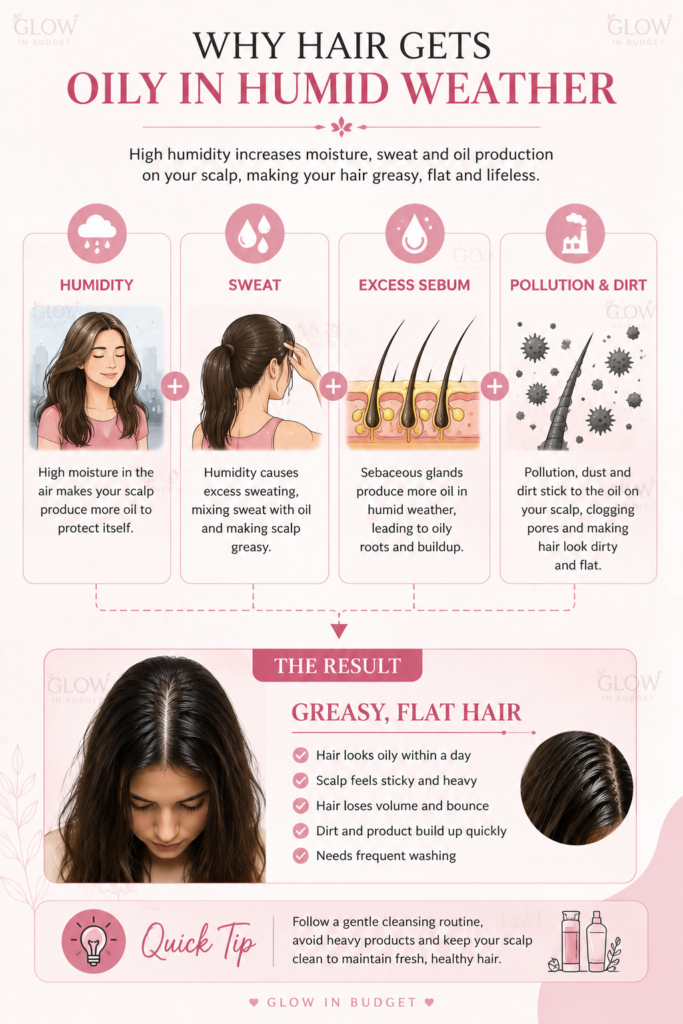
Many people notice that their hair becomes greasy much faster during the rainy season, even if they shampoo regularly. This happens because high humidity, sweat, and excess sebum production work together to make the scalp oilier than usual.
When the weather is humid, your scalp produces more natural oil (sebum) to protect itself. At the same time, increased sweating mixes with this oil, allowing dust, pollution, and product residue to stick to your hair more easily. As a result, your hair may look flat, feel sticky, lose volume, and require washing more frequently.
People with naturally oily scalps often experience these changes more intensely. However, using harsh shampoos or overwashing your hair can strip away natural oils, causing the scalp to produce even more oil to compensate. A balanced hair care routine is the key to keeping your scalp fresh without making it excessively dry.
According to the American Academy of Dermatology (AAD), washing your hair based on your scalp type and using suitable hair care products can help control excess oil and keep your scalp healthy, especially in hot and humid weather.
Common Signs of Oily Hair in Humid Weather
- Hair looks greasy within a day of washing.
- The scalp feels sticky or sweaty.
- Hair loses volume and appears flat.
- Roots become oily while the ends remain dry.
- Dirt and pollution build up more quickly on the scalp.
- Frequent itching or mild dandruff caused by excess oil.
Quick Tip: Instead of washing your hair every day, choose a gentle shampoo suitable for oily scalps and avoid applying conditioner directly to your roots.
Morning Hair Care Routine for Oily Hair in Humid Weather
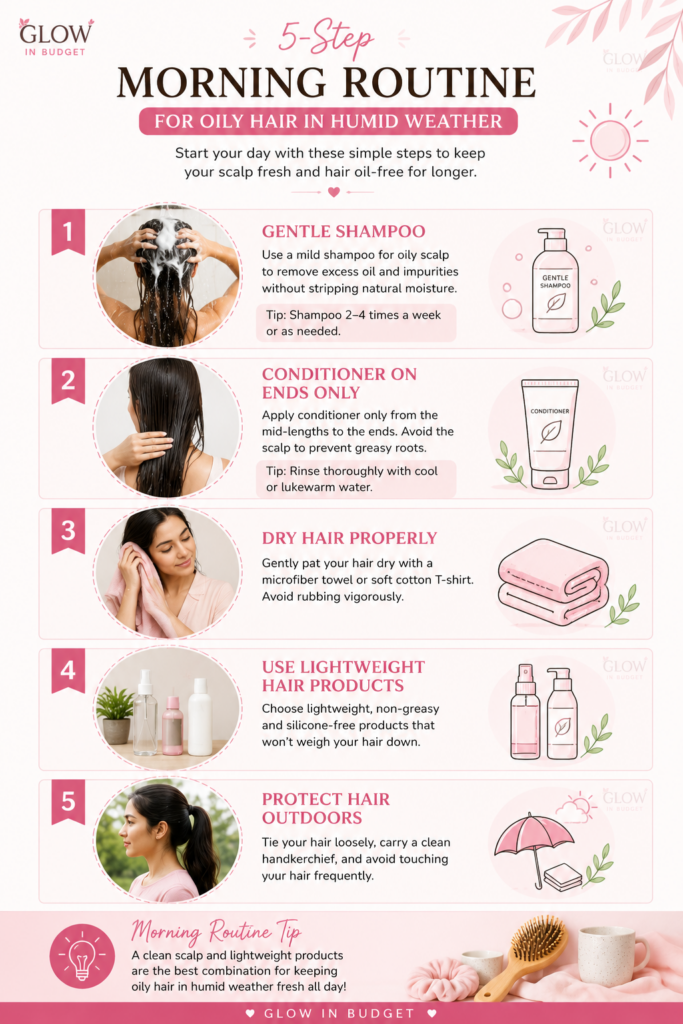
Starting your day with the right hair care routine can help control excess oil, keep your scalp feeling fresh, and prevent greasy roots throughout the day. The goal is to cleanse gently, avoid heavy products, and protect your hair from humidity without stripping away its natural moisture.
Step 1: Wash Your Hair with a Gentle Shampoo
If your scalp becomes oily quickly, use a mild shampoo formulated for oily hair. Avoid harsh shampoos that completely strip away natural oils, as they can trigger your scalp to produce even more oil.
Tip: Shampoo 2–4 times a week, or as needed based on your scalp type.
Step 2: Apply Conditioner Only to the Mid-Lengths and Ends
Conditioner keeps your hair soft and manageable, but applying it to your scalp can make your roots greasy much faster.
- Apply conditioner from the middle of your hair to the ends.
- Rinse thoroughly with cool or lukewarm water.
Step 3: Dry Your Hair Properly
Leaving your scalp damp for long periods can make it feel sticky and attract dirt more easily.
- Gently pat your hair dry with a microfiber towel or a soft cotton T-shirt.
- Avoid rubbing your hair vigorously, as it can cause frizz and breakage.
Step 4: Use Lightweight Hair Products
Heavy creams, thick serums, and rich oils can weigh your hair down during humid weather.
Choose products labeled:
- Lightweight
- Non-greasy
- Silicone-free (if suitable for your hair type)
Step 5: Protect Your Hair Before Going Outdoors
Humidity, pollution, and sweat can quickly make freshly washed hair oily.
Before stepping outside:
- Tie your hair loosely if it’s long.
- Carry a clean handkerchief to wipe away excess sweat.
- Avoid touching your hair frequently, as your hands transfer oil and dirt.
Morning Routine Tip: A clean scalp and lightweight products are the best combination for keeping oily hair in humid weather looking fresh all day.
If your hair feels dry instead of oily, follow our Hair Care Routine for Dry Hair in Humid Weather for better hydration and frizz control.
Night Hair Care Routine for Oily Hair in Humid Weather
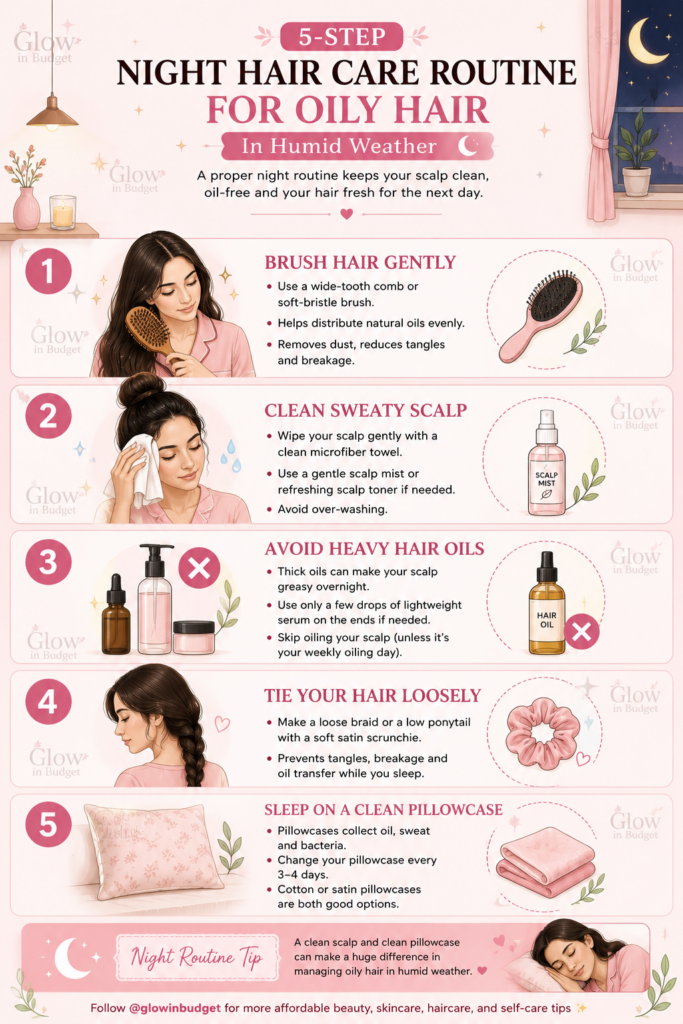
A proper nighttime routine helps remove sweat, excess oil, and pollution that accumulate on your scalp throughout the day. Going to bed with a clean scalp can reduce buildup, minimize clogged hair follicles, and keep your hair feeling fresher the next morning.
Step 1: Brush Your Hair Gently
Before going to bed, gently detangle your hair using a wide-tooth comb or a soft-bristle brush.
This helps:
- Distribute natural oils evenly.
- Reduce tangles and breakage.
- Remove loose dust and debris.
Step 2: Clean Your Scalp if It Feels Sweaty
If you have been outdoors or exercised during the day, your scalp may feel sweaty or sticky.
Instead of washing your hair every night:
- Wipe your scalp gently with a clean microfiber towel.
- Use a gentle scalp mist or refreshing scalp toner if needed.
Avoid over-washing, as it may increase oil production over time.
Step 3: Avoid Heavy Hair Oils Before Bed
Applying thick oils every night can make oily hair in humid weather look even greasier.
If your hair needs nourishment:
- Use only a few drops of lightweight hair serum on the ends.
- Skip oiling your scalp unless it’s your designated weekly oiling day.
Step 4: Tie Your Hair Loosely
Sleeping with loose hair can create friction, tangles, and transfer oil from your scalp to your hair strands.
Instead:
- Make a loose braid.
- Or tie a low ponytail using a soft satin scrunchie.
This helps reduce breakage while keeping your hair neat overnight.
Step 5: Sleep on a Clean Pillowcase
Your pillowcase collects oil, sweat, and bacteria over time.
For a healthier scalp:
- Change your pillowcase every 3–4 days.
- Cotton or satin pillowcases are both good options if kept clean.
A clean sleeping surface helps your hair stay fresher for longer.
Night Routine Tip: A clean scalp and clean pillowcase can make a noticeable difference in managing oily hair in humid weather.
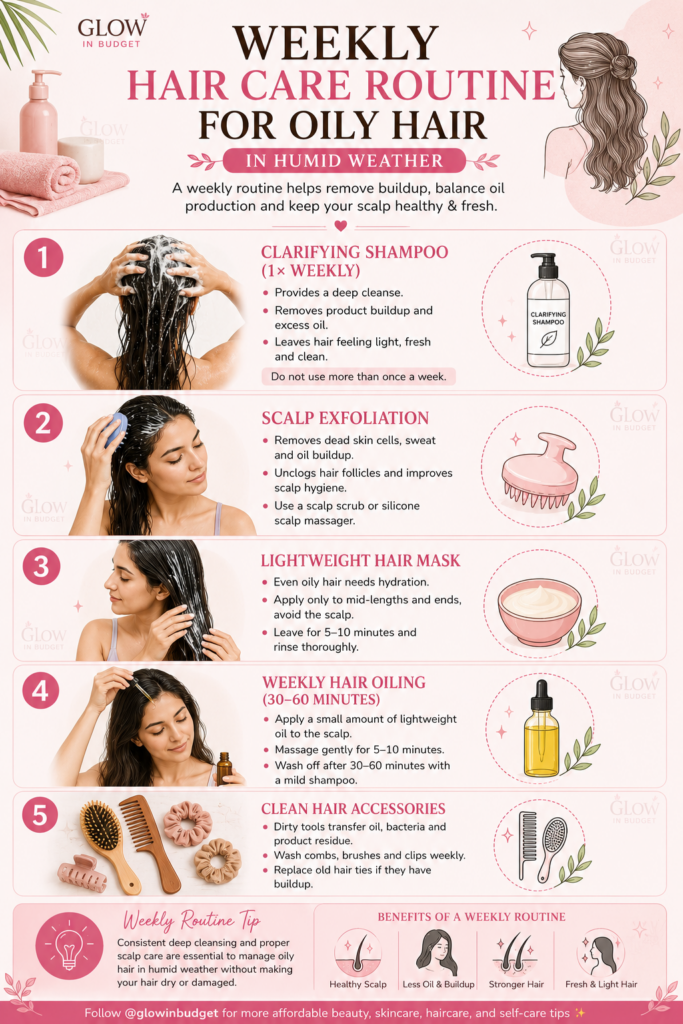
Weekly Hair Care Routine for Oily Hair in Humid Weather
A weekly hair care routine helps remove product buildup, excess oil, sweat, and pollution that regular shampooing may not completely eliminate. Giving your scalp extra care once a week can keep it healthy, balanced, and fresh throughout the humid season.
Step 1: Use a Clarifying Shampoo Once a Week
Regular shampoos cleanse everyday dirt, but a clarifying shampoo provides a deeper cleanse.
Benefits include:
- Removes product buildup.
- Clears excess oil from the scalp.
- Helps hair feel lighter and fresher.
Avoid using clarifying shampoo more than once a week, as overuse can dry out your scalp.
Step 2: Exfoliate Your Scalp
Dead skin cells, sweat, and oil can clog hair follicles over time.
Once a week, gently exfoliate your scalp using:
- A scalp scrub.
- A silicone scalp massager while shampooing.
This improves scalp hygiene and promotes a healthier environment for hair growth.
Step 3: Apply a Lightweight Hair Mask
Even oily hair needs hydration.
Choose a lightweight hair mask and apply it only to the mid-lengths and ends, avoiding the scalp.
Leave it on for 5–10 minutes before rinsing thoroughly.
Step 4: Oil Your Hair the Right Way
Many people think oily hair should never be oiled, but that’s a myth.
Once a week:
- Apply a small amount of lightweight oil to your scalp.
- Massage gently for 5–10 minutes.
- Wash it off after 30–60 minutes with a mild shampoo.
Avoid leaving oil on overnight if your scalp becomes greasy easily.
Step 5: Clean Your Hair Accessories
Dirty hair tools can transfer oil, bacteria, and product residue back to your clean hair.
Every week:
- Wash your combs and brushes.
- Clean hair clips and claw clips.
- Replace old hair ties if they have product buildup.
Keeping your accessories clean helps maintain a healthier scalp.
Weekly Routine Tip: Consistent deep cleansing and proper scalp care are essential for managing oily hair in humid weather without making your hair dry or damaged.
Bonus Tips for Oily Hair in Humid Weather
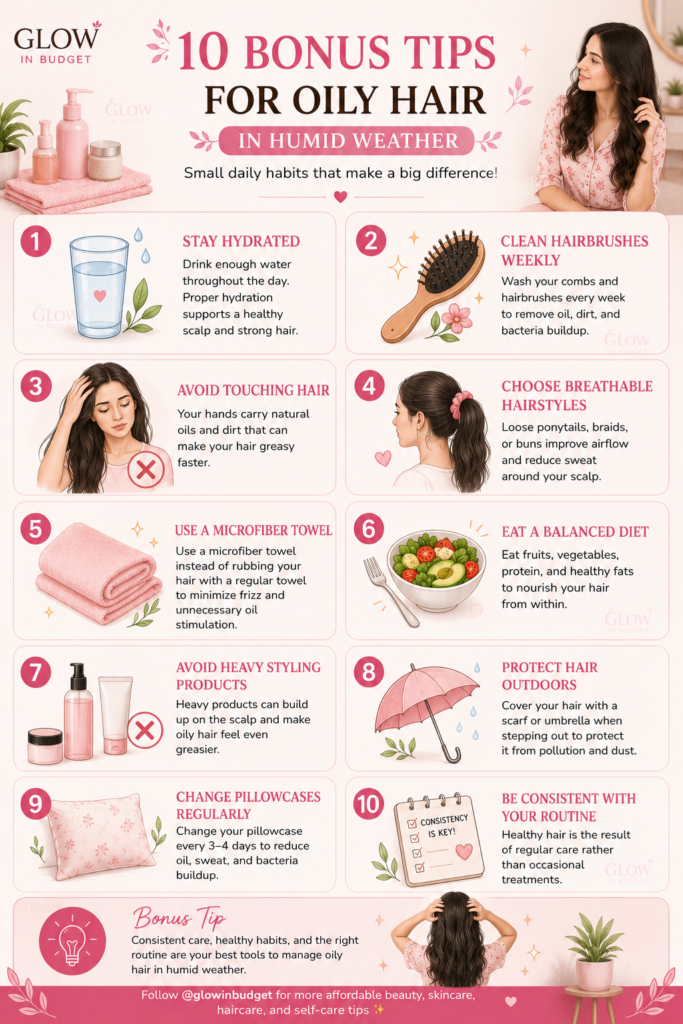
Sometimes, small daily habits make a bigger difference than expensive hair products. These simple bonus tips can help keep your scalp fresh and reduce excess oil throughout the humid season.
✅ Bonus Tips
- Wash your combs and hairbrushes every week to prevent oil, dirt, and bacteria from transferring back to your clean hair.
- Avoid touching your hair frequently, as your hands carry natural oils and dirt that can make your hair greasy faster.
- Choose breathable hairstyles like loose ponytails, braids, or buns to improve airflow and reduce sweat around your scalp.
- Use a microfiber towel instead of rubbing your hair with a regular towel to minimize frizz and prevent unnecessary oil stimulation.
- Stay hydrated by drinking enough water every day. Proper hydration supports a healthier scalp and overall hair health.
- Eat a balanced diet rich in fruits, vegetables, protein, and healthy fats to nourish your hair from within.
- Protect your hair from pollution and dust by covering it with a scarf or umbrella when spending long hours outdoors.
- Avoid applying heavy styling products every day, as they can build up on the scalp and make oily hair feel even greasier.
- Keep your pillowcase clean and change it every 3–4 days to reduce oil, sweat, and bacteria buildup.
- Be consistent with your routine. Healthy hair is the result of regular care rather than occasional treatments.
Common Mistakes to Avoid for Oily Hair in Humid Weather
Even if you’re following a good hair care routine, a few common mistakes can make oily hair look greasy and lifeless. Avoid these habits to keep your hair fresh and healthy.
1. Washing Your Hair Too Frequently
Overwashing strips your scalp of its natural oils, causing it to produce even more oil.
2. Applying Conditioner to the Scalp
Conditioner should only be applied from the mid-lengths to the ends. Applying it to the scalp can make your roots greasy.
3. Using Heavy Hair Oils Daily
Heavy oils can weigh down oily hair. Instead, use lightweight oils only once a week before shampooing.
4. Touching Your Hair Constantly
Your hands transfer dirt and oil to your hair, making it become greasy much faster.
5. Skipping Regular Hairbrush Cleaning
Hairbrushes collect oil, dust, and product buildup. Clean them weekly to prevent transferring dirt back to freshly washed hair.
6. Using Too Many Styling Products
Heavy serums, creams, and waxes can make oily hair look flat and sticky, especially during humid weather.
7. Sleeping on a Dirty Pillowcase
A pillowcase absorbs oil and sweat over time. Change it every 3–4 days to help keep your scalp cleaner.
Frequently Asked Questions (FAQs)
1. Why does my hair become oily so quickly in humid weather?
Humidity increases sweat production and can make your scalp produce more sebum (natural oil). When sweat, oil, and pollution mix together, your hair may look greasy, flat, and require more frequent washing.
2. How often should I wash oily hair in humid weather?
Most people with oily hair benefit from washing their hair every 1–2 days during humid weather. Choose a gentle shampoo that removes excess oil without stripping your scalp of its natural moisture.
3. Can I apply hair oil if I already have oily hair?
Yes. Oily hair still needs nourishment, but avoid leaving oil on your scalp overnight. Instead, use a lightweight hair oil once a week for 30–60 minutes before shampooing, then wash it out thoroughly.
4. Should I use conditioner on oily hair?
Yes, but only on the mid-lengths and ends of your hair. Avoid applying conditioner directly to the scalp, as it can make your roots appear greasy more quickly.
5. Which hairstyle is best for oily hair in humid weather?
Simple hairstyles such as a loose braid, low ponytail, or bun help reduce friction, minimize sweating around the scalp, and keep hair looking neat throughout the day.
6. Can humidity cause hair fall?
Humidity itself does not directly cause hair fall. However, excess sweat, oil buildup, scalp irritation, and poor scalp hygiene can weaken hair over time, leading to increased shedding. Keeping your scalp clean is essential for healthy hair growth.
7. Which shampoo is best for oily hair in humid weather?
Look for a gentle clarifying or oil-control shampoo that removes excess sebum without over-drying your scalp. Avoid shampoos with heavy moisturizing formulas if your scalp becomes oily quickly.
Internal Reading:
If humidity is also causing excessive hair shedding, don’t miss our Hair Fall in Humid Weather: Causes, Prevention & Hair Care Tips guide for practical tips to reduce seasonal hair fall.
If you’re experiencing excessive shedding during the rainy season, read our complete guide on Hair Fall in Humid Weather to learn the causes and effective solutions.
Final Thoughts
Managing Hair Care Routine for Oily Hair in Humid Weather doesn’t have to be complicated or expensive. The key is to maintain a clean scalp, use lightweight hair care products, and follow a consistent morning, night, and weekly routine that suits your hair type.
Remember that everyone’s hair is different. Pay attention to how your scalp responds to humidity and adjust your routine when needed. Avoid overwashing, choose gentle products, and keep your hair tools and pillowcases clean to reduce oil buildup.
With a little consistency and the right habits, you can enjoy fresh, healthy-looking hair even during the most humid days. Small daily changes often make the biggest difference in keeping oily hair under control.
Expert Advice
If your scalp remains excessively oily despite following a proper hair care routine, or if you experience persistent itching, redness, dandruff, or unusual hair loss, it’s a good idea to consult a qualified dermatologist or trichologist. These symptoms may indicate an underlying scalp condition that requires professional treatment.
Follow Glow In Budget
Follow @glowinbudget for more affordable beauty, skincare, haircare, and self-care tips. ✨