Introduction
Normal skin is often considered easy to manage, but hot and humid weather can temporarily change how it feels and behaves. Increased humidity and sweating may leave the skin feeling sticky, oilier than usual, or less comfortable, even when your skin is normally well-balanced.
That’s where DIY face masks for normal skin can become a simple, budget-friendly addition to your skincare routine. The right mask can help your skin feel refreshed, soft, and comfortable without turning your routine into a complicated process.
In this guide, you’ll discover 10 DIY face masks for normal skin in humid weather, along with how to prepare and apply each one, how long to leave it on, how often to use it, who should avoid it, and what to do afterward. We’ll also cover safe DIY skincare practices, an easy after-mask routine, common mistakes, and practical tips for keeping normal skin comfortable throughout humid weather.
Glow In Budget Expert Tip: DIY masks should complement your basic skincare routine—not replace gentle cleansing, moisturizer, and daily sun protection.
Why Normal Skin Behaves Differently in Humid Weather
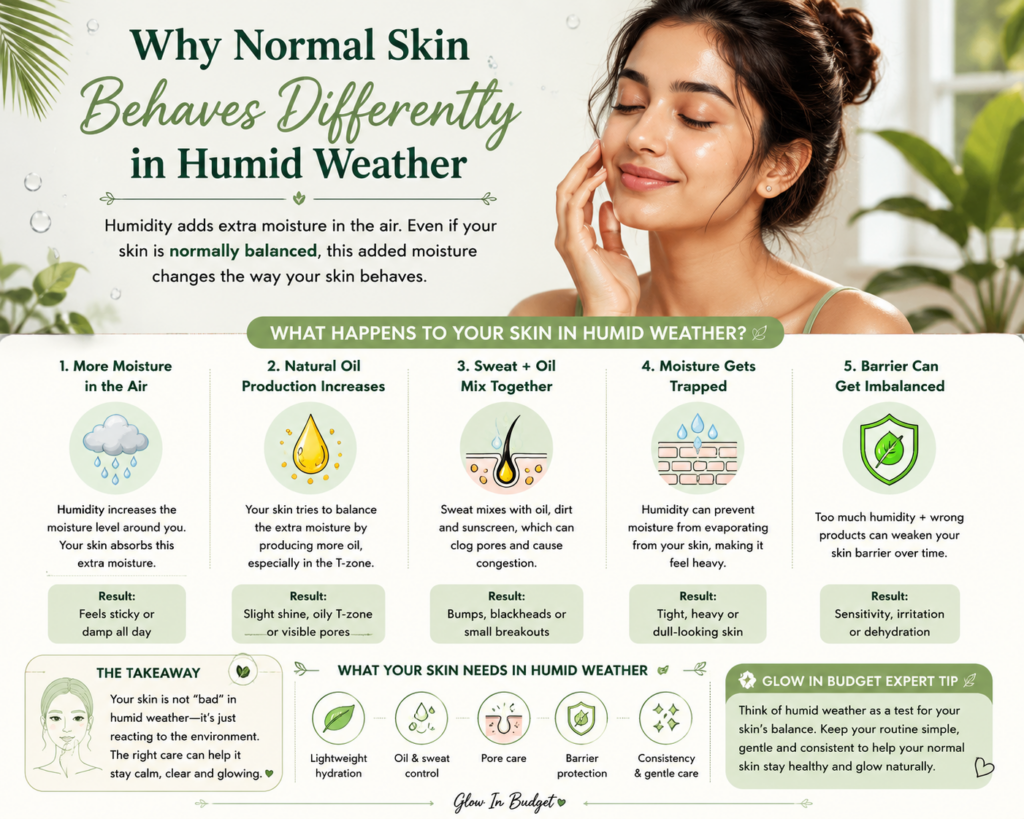
Normal skin generally has a balanced combination of oil and moisture, but that balance can feel different when the weather becomes hot and humid. Higher humidity means there is more moisture in the air, while heat can increase sweating and oil production. As a result, your skin may temporarily feel oilier, stickier, or more congested than usual.
This doesn’t necessarily mean your skin type has changed. Normal skin can still react to environmental conditions, and these temporary changes are one reason your skincare routine may need small adjustments during humid months.
Humid weather doesn’t affect every skin type in exactly the same way. While normal skin may simply feel a little more sweaty or sticky, combination skin can experience more noticeable differences between oily and drier areas of the face. If you have combination skin, understanding how humidity affects those different areas can help you choose a more balanced routine. You can also read our guide to combination skin in humid weather for more practical care tips.
1. Increased Sweating
Hot weather naturally makes you sweat more. When sweat mixes with sebum, sunscreen, makeup, and environmental impurities, your skin can feel greasy or uncomfortable.
2. Skin May Feel More Oily
Even if you have normal skin, heat and humidity can make your T-zone appear shinier than usual. You may notice more oil around the forehead, nose, and chin.
3. A Sticky or Heavy Feeling
Humid air can make skincare products feel heavier on the skin. A moisturizer that feels comfortable during cooler months may suddenly seem too rich.
4. Greater Chance of Congestion
Sweat, excess oil, sunscreen, and buildup can contribute to clogged pores, particularly if you frequently touch your face or don’t cleanse properly after sweating.
5. Your Skin Can Still Become Dehydrated
Humidity doesn’t automatically mean your skin has enough water. Over-cleansing, hot showers, harsh exfoliation, or skipping moisturizer can still leave normal skin feeling tight or dehydrated.
6. Irritation Can Still Happen
More sweating and frequent cleansing can sometimes make the skin more sensitive. Adding harsh DIY ingredients simply because they are “natural” can make matters worse.
Glow In Budget Expert Tip: Don’t try to completely remove every trace of oil during humid weather. Your goal is balanced, comfortable skin—not squeaky-clean skin. A gentle routine usually works better than repeatedly scrubbing or drying out your face.
Signs Your Normal Skin Needs Extra Care
Normal skin can usually maintain a healthy balance of oil and moisture, but humid weather, heat, sweat, and environmental buildup can temporarily make it feel different. Recognizing these changes can help you adjust your routine without over-treating your skin.
Here are some common signs that your normal skin may benefit from a little extra care:
1. Your Skin Feels Greasier Than Usual
You may notice more shine around your forehead, nose, or chin, particularly later in the day.
2. Your Face Feels Sticky After Sweating
A combination of sweat, oil, sunscreen, and skincare products can leave your skin feeling uncomfortable or coated.
3. Your Skin Looks Dull
Sweat and buildup can make your complexion appear less fresh, especially when you’re spending more time outdoors.
4. Your Pores Look More Noticeable
Temporary excess oil and buildup can make pores appear more prominent, even if your pores are normally less visible.
5. Your Skin Feels Rough or Uneven
Frequent sweating, environmental exposure, or an overly aggressive skincare routine can sometimes leave the skin feeling less smooth.
6. Your Skin Feels Tight After Cleansing
This can be a sign that your cleanser is too drying or that you’re cleansing too frequently—not necessarily that you need a stronger face mask.
7. Your Skin Becomes More Sensitive
If products that normally feel comfortable suddenly cause stinging, redness, or irritation, it’s better to simplify your routine rather than adding several new DIY treatments.
When a Face Mask May Not Be the Answer
A face mask isn’t necessary every time your skin looks oily or dull. If you have persistent redness, burning, itching, painful acne, or a rash, skip DIY treatments and consider getting professional skincare advice instead.
Humidity doesn’t always mean that every skin type will feel hydrated. Some people may still experience tightness, roughness, or dry patches, particularly if they cleanse too often or use products that are too harsh. If dryness is a more consistent concern for you, you may find our guide to dry skin in humid weather helpful for building a more comfortable routine.
Glow In Budget Expert Tip: Pay attention to what your skin is actually telling you. If your skin feels balanced and comfortable, you don’t need to use a mask simply because humid weather has arrived. DIY skincare should support your routine—not become another source of irritation.

How to Safely Use DIY Face Masks
DIY face masks can be a simple and affordable addition to a skincare routine, but natural doesn’t automatically mean gentle or safe for everyone. Ingredients commonly used in homemade masks can sometimes cause irritation, dryness, or allergic reactions, especially when used in concentrated amounts or left on the skin for too long.
If your skin is easily irritated, be especially selective about the ingredients you put on your face. Even simple DIY recipes can contain ingredients that don’t agree with sensitive skin, so patch testing and keeping your routine gentle are important precautions. If you have sensitive skin, our guide to sensitive skin in humid weather offers additional tips for keeping your routine comfortable during hot and humid conditions.
Before trying any of the masks in this guide, keep these safety principles in mind.
1. Patch Test New Ingredients First
If you’re using an ingredient for the first time, test a small amount on an inconspicuous area of skin before applying the mask to your entire face.
Stop using it if you notice significant redness, burning, itching, swelling, or irritation.
2. Avoid Harsh DIY Ingredients
Not every popular DIY skincare ingredient deserves a place in a face mask. Be particularly cautious with:
- Lemon or other highly acidic kitchen ingredients
- Undiluted apple cider vinegar
- Baking soda
- Rubbing alcohol
- Strong essential oils
- Fragrance-heavy ingredients
- Coarse physical exfoliants
- Ingredients intended to create an intense peeling effect
The American Academy of Dermatology Association also recommends being cautious with potentially irritating ingredients such as fragrance, essential oils, rubbing alcohol, and harsh physical exfoliants.
3. Don’t Scrub Your Skin Aggressively
A face mask should be applied gently. Don’t massage a drying mask aggressively while removing it, especially if it contains particles that can scratch or irritate the skin.
4. Keep Contact Time Short
Leaving a DIY mask on longer doesn’t necessarily make it more effective. Follow the recommended time for each recipe and rinse it off when instructed.
5. Use Fresh, Clean Ingredients
Because homemade masks don’t contain the preservatives used in many commercial skincare products, prepare only what you need and avoid storing leftover mixtures for repeated use.
Use clean utensils, a clean bowl, and clean hands when preparing and applying your mask.
6. Don’t Use a DIY Mask on Irritated Skin
Skip masking if your skin is:
- Sunburned
- Broken or wounded
- Actively irritated
- Burning or unusually sensitive
- Experiencing an unexplained rash
Let your skin recover before introducing additional treatments.
7. Don’t Combine Multiple Strong Ingredients
More ingredients don’t automatically make a better mask. Combining several potentially irritating ingredients can make it harder to identify what caused a reaction.
For this reason, the recipes in this guide will focus on simple combinations rather than an overloaded list of kitchen ingredients.
8. Don’t Expect a DIY Mask to Fix Every Skin Concern
A homemade mask may help your skin feel temporarily refreshed, soft, or comfortable, but it isn’t a treatment for persistent acne, eczema, pigmentation, infections, or other dermatological conditions.
Glow In Budget Expert Tip: The safest DIY face mask is usually the simplest one. If an ingredient causes burning or significant irritation, rinse it off immediately rather than trying to “push through” the reaction. Your skin doesn’t need to sting for a mask to work. 🌿
10 DIY Face Masks for Normal Skin
Now that we’ve covered how humid weather can affect normal skin and how to use DIY masks safely, it’s time for the recipes.
These masks are designed around simple, affordable ingredients and realistic skincare benefits. Each recipe includes exactly what you need, how to prepare and apply it, how long to leave it on, how often to use it, who should avoid it, and what to do afterward.
Important: “Natural” does not automatically mean irritation-free. Patch-test unfamiliar ingredients, and stop using a mask if it causes burning, significant redness, itching, or swelling.
1. Oatmeal & Yogurt Face Mask
What It Is
A simple soothing mask combining finely ground oats with plain yogurt. It can leave normal skin feeling softer and refreshed without relying on harsh scrubbing.
Ingredients
- 1 tablespoon finely ground plain oats
- 1 tablespoon plain, unsweetened yogurt
How to Prepare
- Add the oats and yogurt to a clean bowl.
- Mix until you have a smooth, spreadable paste.
- If the mixture feels too thick, add a small amount of yogurt.
How to Apply
- Start with clean, slightly damp skin.
- Apply a thin, even layer using clean fingertips.
- Avoid the eye and lip areas.
- Don’t rub the mixture into your skin like a scrub.
How Long to Leave It On
Leave it on for 10–15 minutes.
Rinse gently with lukewarm water and pat your face dry.
How Often to Use It
Use 1–2 times a week if your skin tolerates it well.
Who Should Avoid It
Avoid this mask if:
- You have a known allergy or sensitivity to any ingredient.
- Dairy products or yogurt have previously irritated your skin.
- Your skin is currently irritated, broken, or sunburned.
What to Do Afterward
- Rinse thoroughly without scrubbing.
- Apply a gentle moisturizer.
- If using it during the daytime, finish with sunscreen.
Glow In Budget Expert Tip: Use finely ground oats, not coarse oatmeal flakes. The goal is a comfortable mask—not physical exfoliation.
2. Aloe Vera & Oat Mask
What It Is
A lightweight mask combining aloe vera with finely ground oats. It’s particularly suitable when normal skin feels warm or uncomfortable after spending time in humid weather.
Ingredients
- 1 tablespoon plain aloe vera gel
- 1 tablespoon finely ground oats
How to Prepare
- Combine both ingredients in a clean bowl.
- Mix until they form a soft paste.
How to Apply
- Apply a thin layer to clean skin.
- Avoid the eye area and lips.
- Don’t massage it aggressively into your skin.
How Long to Leave It On
Leave it on for 10–15 minutes.
Rinse gently with lukewarm or cool water.
How Often to Use It
Use 1–2 times a week as needed.
Who Should Avoid It
Avoid it if:
- Aloe vera has previously caused irritation or an allergic reaction.
- Your skin is currently broken or significantly irritated.
- You’re using fresh aloe from a plant and aren’t sure how to properly prepare it.
For a DIY routine, a plain, fragrance-free aloe gel with a simple ingredient list is a more predictable option.
What to Do Afterward
- Pat your skin dry.
- Apply a gentle moisturizer.
- Use sunscreen if it’s daytime.
Glow In Budget Expert Tip: Avoid aloe gels loaded with fragrance, essential oils, or unnecessary additives. A simpler formula is generally a better choice for facial skin.
3. Honey & Oatmeal Face Mask
What It Is
A simple honey-and-oat mask that can leave normal skin feeling soft and comfortable.
Ingredients
- 1 teaspoon plain honey
- 1 tablespoon finely ground oats
- 1–2 teaspoons water, as needed
How to Prepare
- Combine the honey and oats.
- Add a little water until you get a smooth, spreadable consistency.
How to Apply
- Apply a thin layer to clean skin.
- Avoid the eye area.
- Don’t scrub while applying.
How Long to Leave It On
Leave it on for 10 minutes.
Rinse thoroughly with lukewarm water.
How Often to Use It
Use once a week.
Who Should Avoid It
Avoid this mask if:
- You have a known allergy to honey or bee-related products.
- Honey has previously irritated your skin.
- Your skin is currently irritated or damaged.
What to Do Afterward
Follow with:
- A gentle moisturizer
- Sunscreen if you’re applying the mask during the day
Glow In Budget Expert Tip: Honey is sticky, so resist the temptation to rub your face while removing it. Let lukewarm water soften the mask first.
4. Cucumber & Aloe Vera Mask
What It Is
A refreshing combination of cucumber and aloe vera that can feel particularly pleasant when skin feels warm or uncomfortable.
Ingredients
- 1 tablespoon finely blended cucumber
- 1 tablespoon plain aloe vera gel
How to Prepare
- Blend or finely grate a small amount of fresh cucumber.
- Combine it with aloe vera gel.
- Mix until evenly combined.
How to Apply
- Apply a thin layer to clean skin.
- Avoid the eyes and lips.
- Keep the mixture away from broken skin.
How Long to Leave It On
Leave it on for 10–15 minutes.
Rinse gently with cool or lukewarm water.
How Often to Use It
Use 1–2 times a week.
Who Should Avoid It
Avoid it if:
- You have reacted to cucumber or aloe previously.
- Your skin is irritated or broken.
- Fresh ingredients have been sitting out for an extended period.
What to Do Afterward
- Rinse well.
- Pat dry gently.
- Apply moisturizer.
- Apply sunscreen during the daytime.
Glow In Budget Expert Tip: Because fresh cucumber is perishable, prepare only the amount you’ll use immediately rather than storing homemade mask mixtures.
5. Banana & Yogurt Face Mask
What It Is
A creamy mask made with ripe banana and plain yogurt. It can provide a soft, comfortable skincare step when normal skin feels dry or less supple.
Ingredients
- ½ ripe banana
- 1 tablespoon plain, unsweetened yogurt
How to Prepare
- Mash the banana thoroughly.
- Add yogurt and mix until smooth.
How to Apply
- Apply an even layer to clean skin.
- Avoid the eye and lip areas.
How Long to Leave It On
Leave it on for 10–15 minutes.
Rinse gently with lukewarm water.
How Often to Use It
Use once a week.
Who Should Avoid It
Avoid it if:
- You have a known allergy or sensitivity to banana or dairy.
- Either ingredient has irritated your skin previously.
- Your skin is currently inflamed or damaged.
What to Do Afterward
- Rinse thoroughly.
- Apply a gentle moisturizer.
- Use sunscreen during the day.
Glow In Budget Expert Tip: Don’t keep leftover banana mask in the refrigerator for another application. Fresh DIY mixtures are best prepared in small quantities and used immediately.
6. Avocado & Oat Mask
What It Is
A creamy avocado-and-oat mask designed for days when normal skin feels less comfortable or slightly dry despite humid weather.
Ingredients
- 1 tablespoon mashed ripe avocado
- 1 tablespoon finely ground oats
How to Prepare
- Mash the avocado until smooth.
- Mix in the ground oats.
- Add a few drops of water if needed to create a spreadable consistency.
How to Apply
- Apply a thin layer to clean skin.
- Avoid the eye area.
- Don’t scrub the mixture into your face.
How Long to Leave It On
Leave it on for 10–15 minutes.
Rinse gently with lukewarm water.
How Often to Use It
Use once a week.
Who Should Avoid It
Avoid it if:
- You have an avocado allergy or known sensitivity.
- Your skin is irritated or broken.
- Either ingredient has caused a reaction previously.
What to Do Afterward
- Rinse completely.
- Apply a lightweight moisturizer.
- Use sunscreen if it’s daytime.
Glow In Budget Expert Tip: A small amount is enough. You don’t need a thick layer of mask to get the most comfortable experience.
7. Rice Flour & Yogurt Mask
What It Is
A simple yogurt-based mask with a small amount of finely milled rice flour. It can help the skin feel smoother, but it should be treated as a mask—not a scrub.
Ingredients
- 1 tablespoon plain yogurt
- 1 teaspoon finely milled rice flour
How to Prepare
- Mix the yogurt and rice flour in a clean bowl.
- Stir until you have a smooth paste.
How to Apply
- Spread gently over clean skin.
- Do not massage or scrub the mixture into your face.
- Avoid the eye area.
How Long to Leave It On
Leave it on for 5–10 minutes.
Rinse gently with lukewarm water.
How Often to Use It
Use no more than once a week.
Who Should Avoid It
Avoid it if:
- Your skin is sensitive or easily irritated.
- You have active irritation, sunburn, or broken skin.
- You know that yogurt or rice-based products bother your skin.
What to Do Afterward
- Rinse without rubbing.
- Apply moisturizer.
- Use sunscreen during the day.
Glow In Budget Expert Tip: Rice flour can be abrasive when rubbed against the skin. Keep this recipe smooth and gentle, and never use it as a physical scrub.
8. Papaya & Oat Mask
What It Is
A simple papaya-and-oat mask for a refreshing skincare step. Papaya contains enzymes, so this recipe should be used conservatively rather than treated like a daily mask.
Ingredients
- 1 tablespoon ripe mashed papaya
- 1 tablespoon finely ground oats
How to Prepare
- Mash the papaya until smooth.
- Mix in the finely ground oats.
- Add a little water if needed.
How to Apply
- Apply a thin layer to clean skin.
- Avoid the eye and lip areas.
- Do not rub the mask into the skin.
How Long to Leave It On
Leave it on for 5–10 minutes the first time.
How Often to Use It
Use no more than once every 1–2 weeks.
Who Should Avoid It
Avoid this mask if:
- You have sensitive or easily irritated skin.
- Your skin is currently irritated, sunburned, or broken.
- You have a known sensitivity to papaya.
- You’re already using other exfoliating products or treatments that may make your skin more sensitive.
What to Do Afterward
- Rinse thoroughly with lukewarm water.
- Apply a gentle moisturizer.
- Apply sunscreen if using it during the day.
Glow In Budget Expert Tip: Papaya is one of the masks in this guide that deserves extra caution. More frequent use isn’t better, especially if your skin is already using other exfoliating products.
9. Green Tea & Oat Mask
What It Is
A simple mask made with cooled green tea and finely ground oats. It’s a lightweight option when your skin feels tired or uncomfortable after a hot day.
Ingredients
- 1 tablespoon cooled, freshly brewed green tea
- 1 tablespoon finely ground oats
How to Prepare
- Brew a small amount of plain green tea.
- Allow it to cool completely.
- Mix 1 tablespoon of the cooled tea with the oats.
- Stir until you have a soft paste.
How to Apply
- Apply to clean skin.
- Avoid the eye area.
- Keep the application gentle.
How Long to Leave It On
Leave it on for 10 minutes.
Rinse gently with lukewarm water.
How Often to Use It
Use 1–2 times a week if your skin tolerates it.
Who Should Avoid It
Avoid it if:
- You have previously reacted to green tea or oats.
- Your skin is currently irritated or broken.
- You notice stinging or discomfort during application.
What to Do Afterward
- Rinse thoroughly.
- Pat dry.
- Apply moisturizer.
- Finish with sunscreen during the day.
Glow In Budget Expert Tip: Let the green tea cool completely before mixing it into your mask. Never apply a warm or hot mixture to your face.
10. Honey & Aloe Vera Face Mask
What It Is
A simple combination of honey and plain aloe vera gel for a lightweight, soothing-feeling skincare step.
Ingredients
- 1 teaspoon plain honey
- 1 tablespoon plain aloe vera gel
How to Prepare
- Mix both ingredients in a clean bowl.
- Stir until evenly combined.
How to Apply
- Apply a thin layer to clean skin.
- Avoid the eye and lip areas.
- Don’t rub it into the skin.
How Long to Leave It On
Leave it on for 10 minutes.
Rinse gently with lukewarm water.
How Often to Use It
Use once a week.
Who Should Avoid It
Avoid it if:
- You have a known allergy or sensitivity to honey or aloe vera.
- Either ingredient has irritated your skin before.
- Your skin is currently broken, burning, or significantly irritated.
What to Do Afterward
- Rinse thoroughly.
- Pat dry gently.
- Apply a lightweight moisturizer.
- Apply sunscreen if it’s daytime.
Glow In Budget Expert Tip: Choose plain aloe vera rather than a fragranced or heavily formulated cosmetic gel when making a DIY mask. Keeping the ingredient list simple makes it easier to identify potential irritants.
🌿 A Quick Reminder Before Trying These Masks
You don’t need to use all 10 masks. Choose one that matches how your skin feels, patch-test unfamiliar ingredients, and introduce DIY treatments gradually.
If your skin becomes irritated, stop the mask and return to a simple skincare routine until it feels comfortable again.
Glow In Budget Expert Tip: More DIY treatments don’t mean better skin. Consistency with a gentle basic routine matters more than constantly experimenting with new masks.
How Often Should You Use DIY Face Masks?
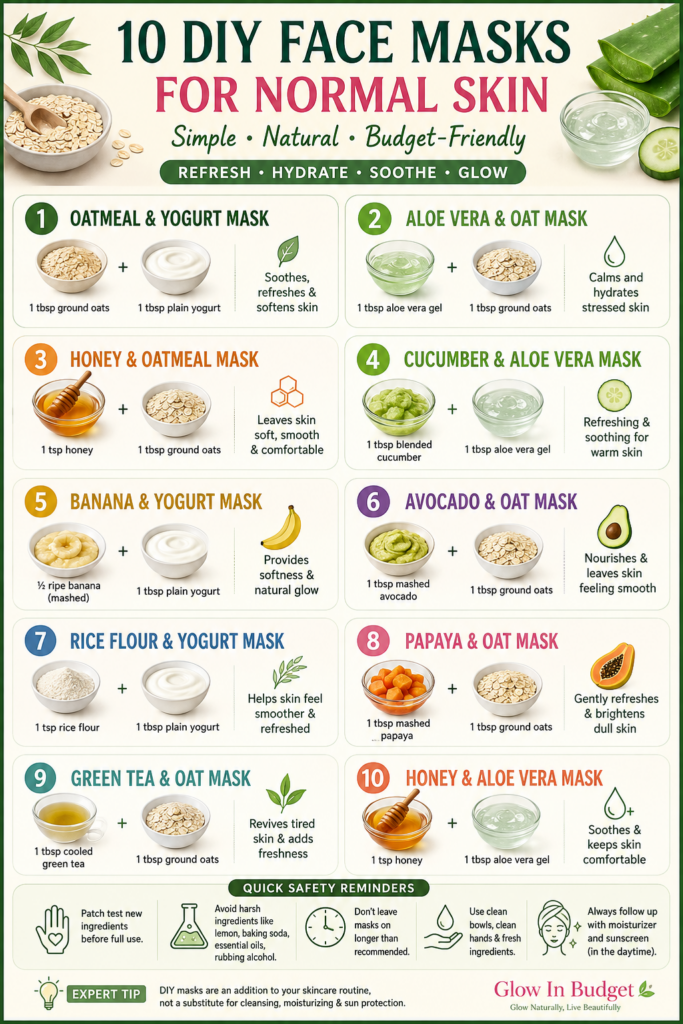
Using a face mask more often doesn’t necessarily mean better results. For normal skin, especially during humid weather, 1–2 mask sessions per week is usually enough. The ideal frequency also depends on the ingredients in the mask and how your skin responds.
A Simple Frequency Guide
- Gentle, soothing masks: 1–2 times a week
- Hydrating or moisturizing masks: About 1–2 times a week
- Masks containing fruit enzymes, such as papaya: Once every 1–2 weeks
- Masks containing potentially abrasive ingredients: Use sparingly, and avoid rubbing them into the skin
- If your skin becomes irritated: Stop using the mask until your skin feels comfortable again
Don’t Use Multiple Masks on the Same Day
There’s no need to layer several DIY masks in one skincare session. Doing so can expose your skin to too many ingredients and make irritation more likely.
Instead, choose one mask based on what your skin needs that day.
Pay Attention to Your Skin
Reduce or stop masking if you notice:
- Burning or stinging
- Persistent redness
- Itching
- Unusual dryness or tightness
- New irritation or sensitivity
Remember that your skin’s needs can change with weather, products, and other factors.
Glow In Budget Expert Tip: Think of DIY masks as an occasional skincare treat, not a daily requirement. A simple, consistent routine is more important than using masks frequently.
After-Mask Skincare Routine
What you do after removing a face mask is just as important as the mask itself. Once you’ve rinsed your skin, keep the rest of your routine simple and gentle, especially if you’ve used a DIY mask for the first time.
1. Rinse Thoroughly
Use lukewarm or cool water to remove the mask.
- Don’t scrub your skin while rinsing.
- Make sure no residue remains around the nose, hairline, or jaw.
- Avoid very hot water, which can leave skin feeling dry or uncomfortable.
2. Pat Your Skin Dry
Use a clean, soft towel and gently pat your face dry.
Avoid rubbing because your skin may be more sensitive immediately after masking.
3. Apply a Gentle Moisturizer
Follow with a lightweight moisturizer that suits your skin.
Even in humid weather, normal skin still benefits from moisturizing. You don’t need to skip moisturizer simply because your face feels slightly oily.
4. Apply Sunscreen During the Day
If you’re doing your mask in the morning or during the daytime, finish with a broad-spectrum sunscreen.
This is especially important when you’re spending time outdoors.
5. Keep the Rest of Your Routine Simple
Immediately after a DIY mask isn’t the best time to experiment with multiple active products.
For example, avoid piling on several exfoliating or potentially irritating products after using a mask.
A simple routine can be enough:
Cleanse → DIY Mask → Moisturizer → Sunscreen
What If Your Skin Feels Dry or Irritated?
If your skin feels unusually tight, itchy, burning, or irritated after a mask:
- Rinse it off completely.
- Don’t apply another DIY treatment.
- Keep your routine gentle.
- Use a simple moisturizer if it feels comfortable.
- Stop using the ingredient that caused the reaction.
If irritation is severe, persistent, or worsening, seek advice from a qualified healthcare professional.
Glow In Budget Expert Tip: Don’t chase an immediate “glow” by adding more products after your mask. Clean skin + gentle moisturizer + daytime sunscreen is often all you need.
Morning Routine for Normal Skin in Humid Weather
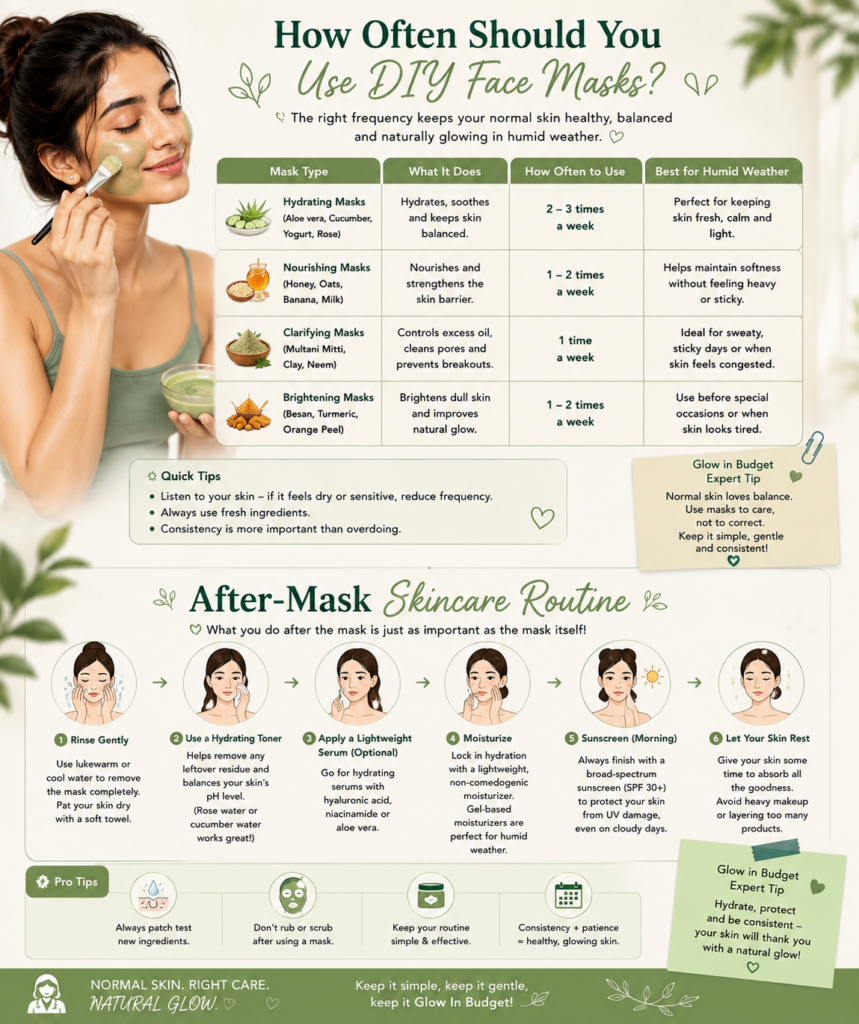
The morning routine should focus on gentle cleansing, lightweight hydration, and sun protection. Even normal skin can feel slightly sticky or dehydrated in humid weather because sweat, oil, and environmental buildup can sit on the skin.
A simple morning routine can be:
1. Gentle cleanse
Start by washing your face with a gentle cleanser to remove sweat, excess oil, and overnight buildup. Avoid very harsh or stripping cleansers, as they can leave normal skin feeling tight and uncomfortable.
2. Lightweight hydration
Follow with a lightweight moisturizer suited to your skin. Humid weather doesn’t mean you should skip moisturizer. Skin still needs hydration, but a lighter texture can feel more comfortable than a heavy cream.
3. Sunscreen
Apply a broad-spectrum sunscreen as the final morning skincare step. Choose a formula that feels comfortable enough to use every day, and reapply as needed when spending time outdoors.
Sunscreen is an important part of a daily skincare routine, even when the weather is humid or cloudy. Look for a broad-spectrum sunscreen that feels comfortable on your skin and apply it consistently when you’re going outside. The American Academy of Dermatology also recommends choosing a sunscreen with broad-spectrum protection and SPF 30 or higher. You can learn more about choosing and using sunscreen from the American Academy of Dermatology’s sunscreen guidance.
4. Keep the routine simple
You don’t need multiple serums, exfoliators, or active ingredients every morning. A consistent routine of cleansing, moisturizing, and sun protection is often enough for normal skin.
✨ Glow In Budget Expert Tip: If your skin becomes sweaty during the day, don’t keep washing your face repeatedly. Gently blot excess sweat and oil instead, because frequent cleansing can make the skin feel dry or irritated.
Night Routine for Normal Skin in Humid Weather
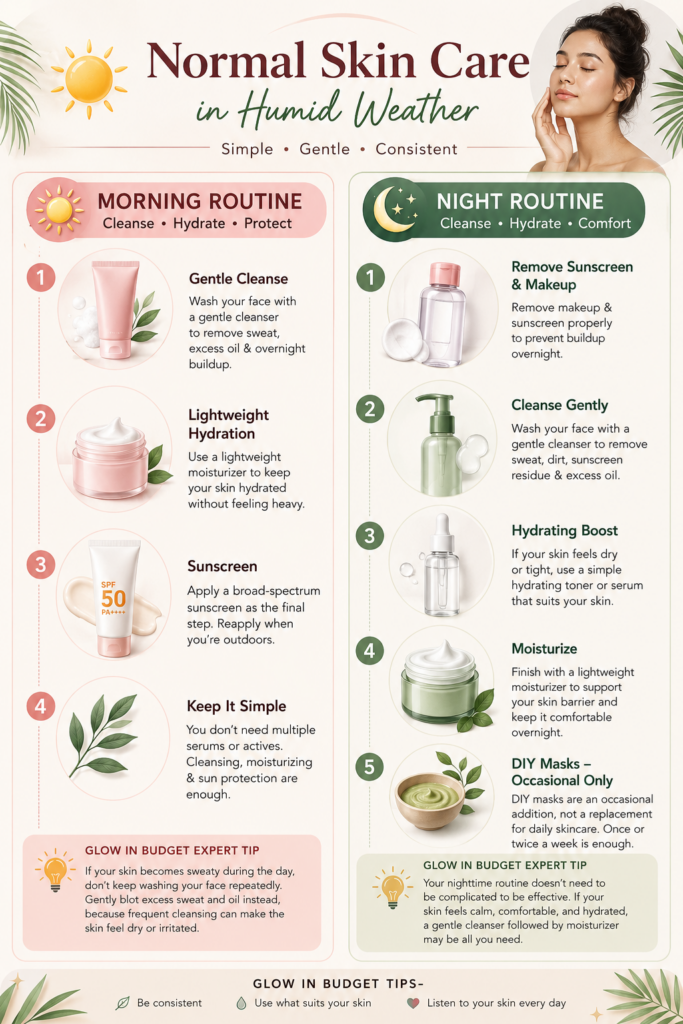
Nighttime is when your routine can shift from protection to gentle cleansing, hydration, and skin comfort. After a full day in humid weather, sunscreen, sweat, pollution, and other buildup should be removed before bed.
1. Remove sunscreen and makeup
If you’ve worn makeup or water-resistant sunscreen, remove it properly before cleansing. This helps prevent leftover product buildup from sitting on the skin overnight.
2. Cleanse gently
Wash your face with a gentle cleanser to remove sweat, dirt, sunscreen residue, and excess oil. Avoid scrubbing aggressively, even if your skin feels oily after a humid day.
3. Apply a hydrating product if needed
If your skin feels comfortable after cleansing, you don’t need to layer several products. If it feels slightly dry or tight, use a simple hydrating serum or toner that your skin already tolerates well.
4. Moisturize
Finish with a lightweight moisturizer. This helps support the skin barrier overnight without making the skin feel excessively heavy or greasy.
5. Keep DIY masks separate from your nightly routine
Don’t automatically use a DIY face mask every night. These masks are an occasional addition to your routine, not a replacement for daily skincare. Depending on the mask, using it once or twice a week may be enough.
✨ Glow In Budget Expert Tip: Your nighttime routine doesn’t need to be complicated to be effective. If your skin feels calm, comfortable, and hydrated, a gentle cleanser followed by moisturizer may be all you need.
Bonus Tips for Maintaining Normal Skin in Humid Weather
Even when your skin is naturally balanced, humid weather can change how it feels throughout the day. Sweat, increased moisture in the air, sunscreen, pollution, and frequent cleansing can sometimes leave your skin feeling sticky, dull, dehydrated, or uncomfortable.
These simple habits can help you maintain a fresh, comfortable-looking complexion while using DIY face masks occasionally.
- Keep your daily routine simple: Normal skin usually doesn’t need a complicated routine with numerous products. Focus on gentle cleansing, comfortable hydration, moisturizer, and daily sunscreen.
- Don’t skip moisturizer because of humidity: Humid weather can make your skin feel moisturized, but that doesn’t mean your skincare routine should completely exclude moisturizer. Choose a lightweight formula if heavier products feel uncomfortable.
- Use sunscreen every morning: Humid or cloudy weather doesn’t eliminate the need for sun protection. Apply a broad-spectrum sunscreen as part of your regular morning routine, especially when you’ll be outdoors.
- Avoid washing your face too frequently: If your face becomes sweaty during the day, repeatedly washing it may leave your skin feeling dry or irritated. Instead, gently blot excess sweat when necessary and cleanse normally.
- Keep your face towel clean: Use a clean, soft towel and avoid rubbing your face aggressively after cleansing. Pat the skin dry gently.
- Change your pillowcase regularly: Pillowcases can collect sweat, oil, hair products, and skincare residue. Regularly changing them is a simple hygiene habit that can help keep your nighttime routine cleaner.
- Stay hydrated throughout the day: Drinking enough fluids supports your body’s overall hydration. Don’t rely on skincare alone when you’re spending time in hot and humid conditions.
- Pay attention to how your skin feels: Your skin may behave differently from one humid day to another. If it suddenly feels dry, irritated, unusually oily, or sensitive, simplify your routine instead of adding more products.
- Don’t turn every skincare day into a mask day: DIY face masks are an occasional addition to your routine. Using them too frequently can unnecessarily expose your skin to ingredients it doesn’t need every day.
- Patch-test unfamiliar ingredients: Even natural ingredients can cause irritation or an allergic reaction in some people. If you’re trying a new DIY mask, test a small amount on an inconspicuous area first and discontinue use if irritation develops.
- Even ingredients that seem gentle or natural can cause a reaction in some people. That’s why it’s a good idea to test a new skincare ingredient on a small area before applying it more broadly to your face. If you notice redness, itching, swelling, or other signs of irritation, stop using the product. The American Academy of Dermatology explains how to test skincare products safely and recognize possible reactions.
- Prepare DIY masks fresh: Homemade masks generally don’t contain the preservatives found in commercial skincare products. Prepare only the amount you need and avoid storing homemade mixtures for repeated use.
- Be especially careful with food ingredients: Just because an ingredient is commonly used in a kitchen doesn’t automatically mean it is suitable for facial skin. Avoid ingredients that are harsh, highly acidic, abrasive, or likely to irritate your skin.
- Give your skin a break when needed: If your skin becomes red, itchy, burning, unusually dry, or irritated, pause DIY masks and simplify your routine until your skin feels comfortable again.
✨ Glow In Budget Expert Tip: The goal isn’t to do more to your skin just because the weather is humid. A simple, consistent routine is often more helpful than constantly adding new masks, scrubs, or skincare products.
Common Mistakes to Avoid When Using DIY Face Masks
DIY skincare can be enjoyable and affordable, but more isn’t always better. Some common mistakes can make normal skin feel irritated or unbalanced, particularly when combined with hot and humid weather.
- Using DIY masks too frequently: A face mask doesn’t need to become a daily skincare step. Overusing masks can expose your skin to unnecessary ingredients and may lead to dryness or irritation.
- Leaving a mask on for too long: Longer application doesn’t automatically mean better results. Follow the recommended time for the particular mask and rinse it off if your skin starts feeling uncomfortable.
- Scrubbing the skin while removing the mask: Avoid rubbing or exfoliating aggressively while washing off a DIY mask. Use lukewarm water and gentle movements.
- Using harsh ingredients: Avoid DIY recipes containing ingredients that can be irritating, highly acidic, abrasive, or drying. A natural ingredient isn’t automatically a gentle ingredient.
- Adding essential oils directly to face masks: Essential oils can irritate facial skin, particularly when used incorrectly or without appropriate dilution. They aren’t necessary for a simple DIY face mask.
- Using lemon juice or other harsh acidic ingredients: Kitchen ingredients that are acidic can be too irritating for facial skin. A DIY mask should not leave your skin burning or stinging.
- Skipping patch testing: Even ingredients you’ve used before may cause a reaction under different circumstances. Patch testing is a useful precaution when introducing a new DIY mixture.
- Applying a mask to irritated or damaged skin: If your skin is already red, broken, sunburned, itchy, or irritated, skip the DIY mask and focus on gentle skincare instead.
- Skipping moisturizer after a mask: Depending on the ingredients, your skin may benefit from gentle hydration afterward. Don’t assume that washing off the mask means your skincare routine is finished.
- Forgetting sunscreen the next morning: If you’ve used a mask as part of your nighttime routine, continue with your normal morning skincare routine and apply sunscreen.
- Mixing too many DIY ingredients: Combining several ingredients doesn’t necessarily make a mask more effective. Simple recipes are easier to understand, use, and troubleshoot if your skin reacts.
- Keeping homemade masks for several days: Homemade skincare mixtures don’t have the same preservation system as commercially formulated products. Fresh preparation is the safer approach.
- Copying every viral skincare trend: A recipe becoming popular online doesn’t mean it is suitable for every skin type. Consider the ingredients and how your own skin responds before trying a trend.
- Expecting instant transformation: DIY masks should be viewed as an occasional skincare step rather than a quick solution for every skin concern. Consistent basic skincare habits matter more over time.
✨ Glow In Budget Expert Tip: If a DIY mask causes burning, significant redness, itching, or discomfort, don’t try to “push through it.” Rinse it off gently and stop using the ingredient or recipe.
Frequently Asked Questions About DIY Face Masks for Normal Skin in Humid Weather
Can I use DIY face masks every day if I have normal skin?
No. Using a DIY face mask every day isn’t necessary, even if you have normal skin. Depending on the ingredients and your skin’s tolerance, occasional use is generally more appropriate. Your daily routine should remain focused on gentle cleansing, hydration, moisturizing, and sun protection.
How often should I use a DIY face mask?
For most simple DIY masks, starting with once a week is a reasonable approach. If your skin tolerates the mask well and the specific recipe is gentle, you can adjust based on how your skin responds. Avoid increasing frequency simply because you want faster results.
Is normal skin really affected by humid weather?
Yes. Normal skin can still respond to changes in temperature and humidity. Increased sweating, environmental buildup, sunscreen, and frequent cleansing may make the skin feel different from its usual balanced state.
Should I moisturize after using a DIY face mask?
Yes, if your skin needs hydration after rinsing the mask. Apply a lightweight moisturizer that your skin already tolerates well. You don’t need to apply several products afterward.
Should I use a face mask before or after cleansing?
Generally, cleanse your face first so the mask can be applied to clean skin. After removing the mask, follow with your usual gentle hydration and moisturizing steps.
Can I use a DIY face mask at night?
Yes. Nighttime can be a convenient time to use a DIY mask because you can cleanse your skin afterward and finish with a simple moisturizer. However, using a mask at night doesn’t mean you need to add several other active skincare products.
Should I use sunscreen after a morning face mask?
Yes. If you’re using a face mask in the morning, complete your skincare routine with sunscreen before going outdoors.
Can I use the same DIY mask throughout the year?
Not necessarily. Your skin can respond differently depending on weather, humidity, temperature, and other factors. A mask that feels comfortable during humid weather may feel too drying during a colder or drier season.
Can I store leftover DIY face mask mixture?
It’s better to prepare only what you need and use it fresh rather than keeping homemade mixtures for several days. Homemade skincare doesn’t have the same preservation system as commercially formulated products.
What should I do if a DIY mask irritates my skin?
Rinse the mask off gently and stop using it. Avoid immediately applying additional exfoliating or irritating products. If the irritation is severe, persistent, or worsening, seek advice from a qualified healthcare professional.
Can natural ingredients cause skin irritation?
Yes. “Natural” does not automatically mean “irritation-free.” Some natural ingredients can cause sensitivity or allergic reactions, so patch testing and careful ingredient selection are important.
Can I use a DIY face mask if my skin is already irritated?
It’s better to skip the mask until your skin has settled. Applying additional ingredients to irritated skin can make discomfort worse.
Do DIY face masks replace a normal skincare routine?
No. A face mask is an occasional addition to skincare, not a replacement for daily cleansing, moisturizing, and sun protection. A consistent basic routine is more important than frequently using masks.
✨ Glow In Budget Expert Tip: Think of DIY masks as a small supporting step in your skincare routine—not the foundation of it. Healthy-looking skin starts with consistent everyday habits.
Final Thoughts
Normal skin may naturally have a good balance of oil and hydration, but humid weather can still make it feel different. Sweat, heat, sunscreen, pollution, and increased moisture in the air can sometimes leave your complexion feeling sticky, dull, dehydrated, or simply less comfortable than usual.
That’s where a simple and thoughtful skincare routine can help.
The DIY face masks in this guide can be used as an occasional addition to your routine when your skin feels like it needs a little extra care. The key is not to use every mask or apply them too frequently. Instead, choose gentle options, pay attention to how your skin responds, and keep your everyday routine consistent.
Remember that gentle cleansing, lightweight hydration, moisturizer, and daily sun protection are more important than constantly experimenting with new DIY recipes.
And if your skin becomes irritated, unusually sensitive, or uncomfortable, give the masks a break and return to a simple skincare routine.
At Glow In Budget, we believe skincare doesn’t have to be complicated or expensive to feel good. With the right habits, a little consistency, and ingredients you can use thoughtfully, you can build a practical routine without overspending.
Follow Glow In Budget
Found this guide helpful?
Follow @glowinbudget for more affordable beauty, skincare, hair care, and self-care tips. We regularly share practical routines, expert-backed advice, and budget-friendly solutions to help you look and feel your best—without overspending.